Creative Navy x Harley Hospital.

Creating a digital identity for healthcare built on trust and integrity.

Harley Hospital* patients were experiencing frustration and wasted time when trying to book and manage appointments due to a fragmented booking system that combined outdated methods (phone and email) and confusing processes.
The goal was to transition 30% of existing clients to a unified, usable mobile app, streamline booking, and align with the hospital’s commitment to high-quality care and desire to improve the patient experience.
Over a two-month period, I worked on behalf of Creativity Navy as part of a team of 6 other UX Designers based at King’s College, University of London, to create a digital identity for a private healthcare clinic. I took the lead at the start of the project.
*Harley Hospital was the pseudonym used for the real client that we served through this project.
During the early weeks of client onboarding, I took on the role of Project Lead to oversee the initial processes, establish expectations, and set milestones, later handing over to other lead designers.
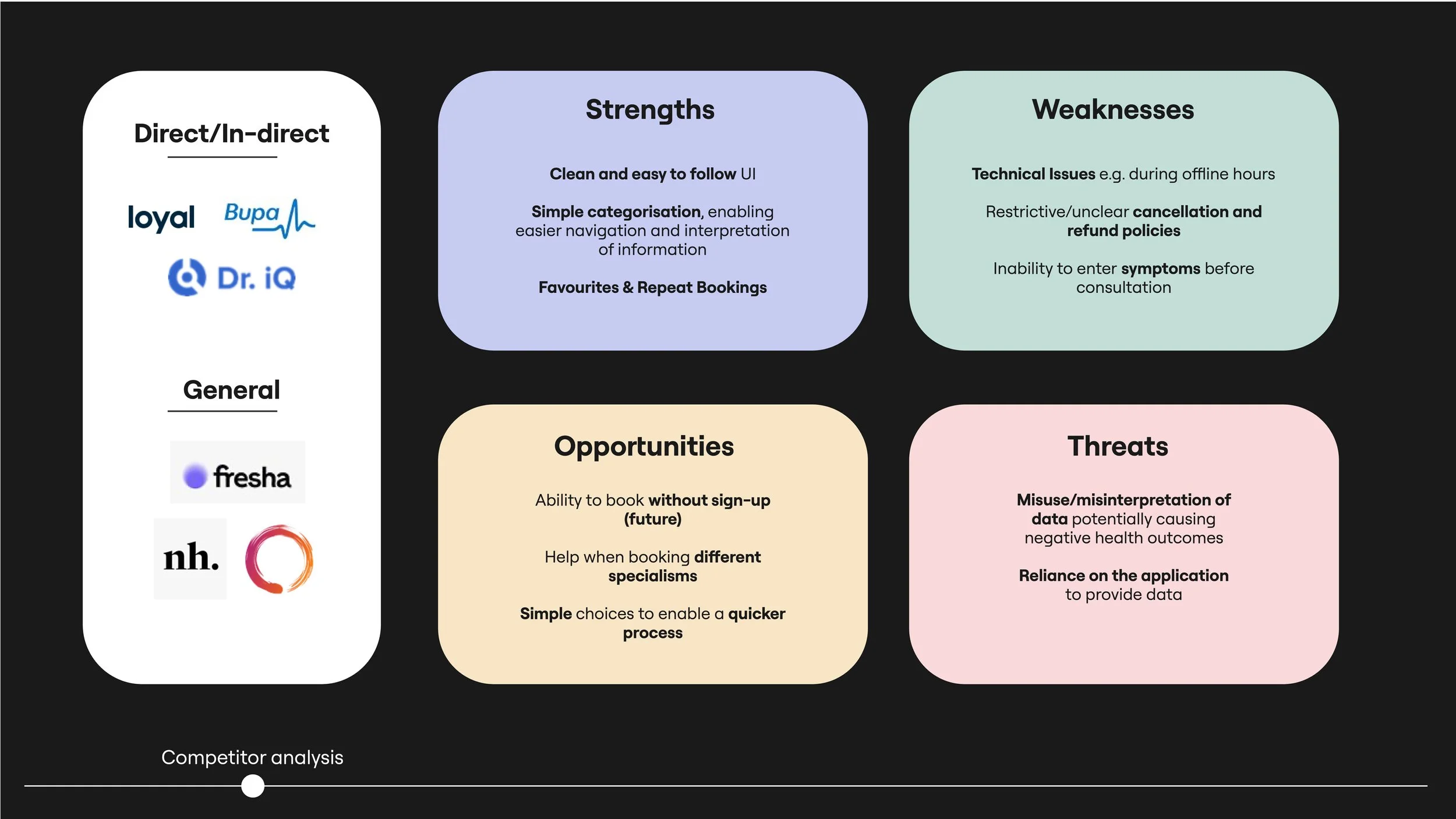
Transitioning patients who were used to speaking to a receptionist was tricky, and we needed to be sensitive and mitigate any risks to the business. A strengths/weaknesses analysis was useful, but the interviews helped us grasp the nuances of patients’ perspectives.
A simple, speedy process was not the only need. Any digital engagement should be just as reassuring and trustworthy as an encounter with a clinical practitioner.
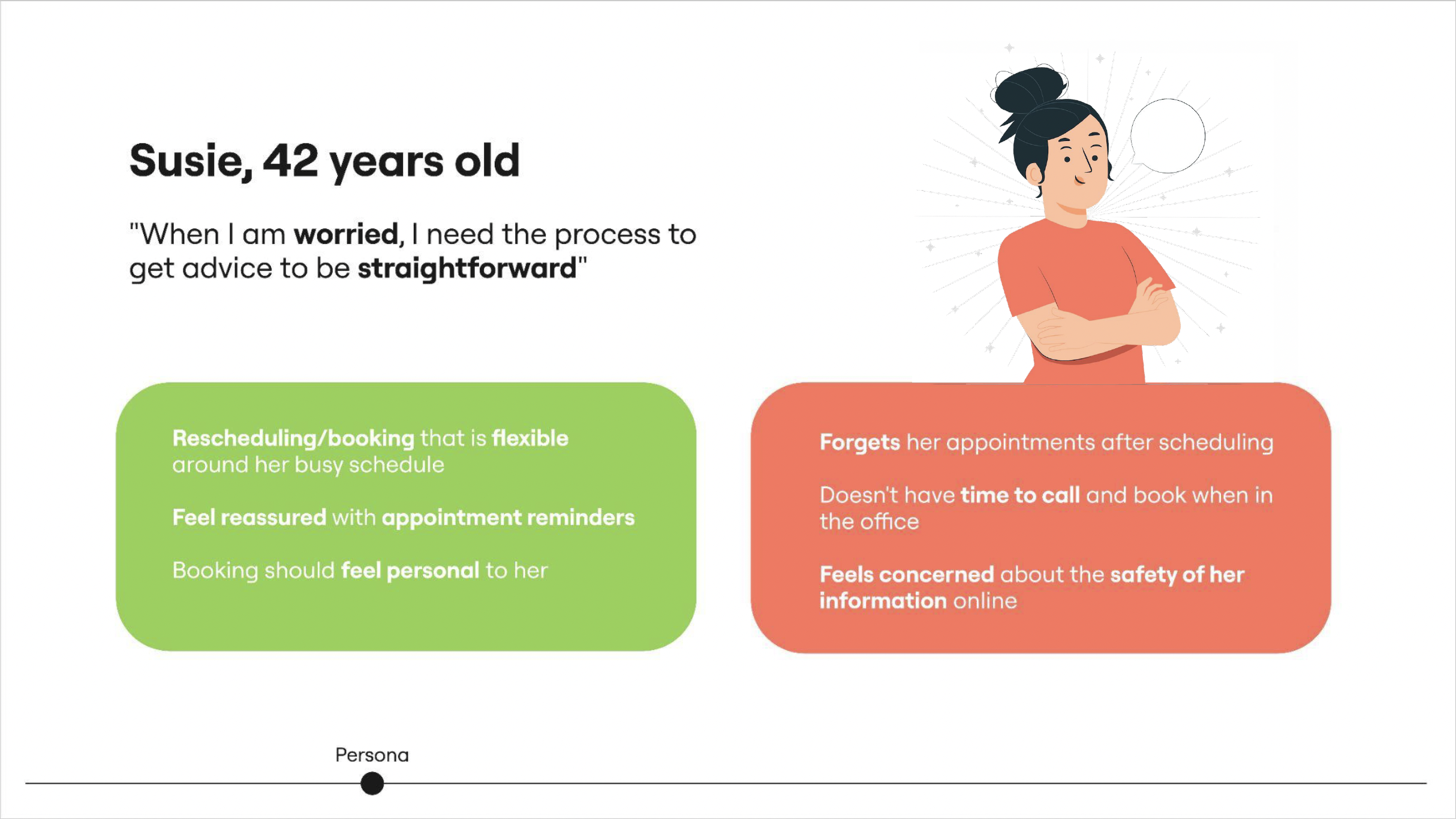
Health matters are often complex. Avoiding overwhelming patients with too many options when they might already feel overburdened and anxious overrides the benefits of tech features.
One user persona stood out; a woman in her early 40s with complex health matters and significant work and caring responsibilities. While educated and used to booking and interacting online, her experiences and attitudes highlight the essential nature of simple steps, clear protocols, and communication.
Already feeling worried about her health, robust measures were needed to support her feeling and being safe.

Simplicity in ideation
We set aside our ideas for innovative features for the time being, recognising that these could be integrated at appropriate moments.
We decided to plan for three primary tasks:
1) Booking an appointment,
2) Rescheduling an appointment, and
3) Rebooking an appointment.
If patients perform these with ease and comfort, then this would become the benchmark for a high-quality, trustworthy system.

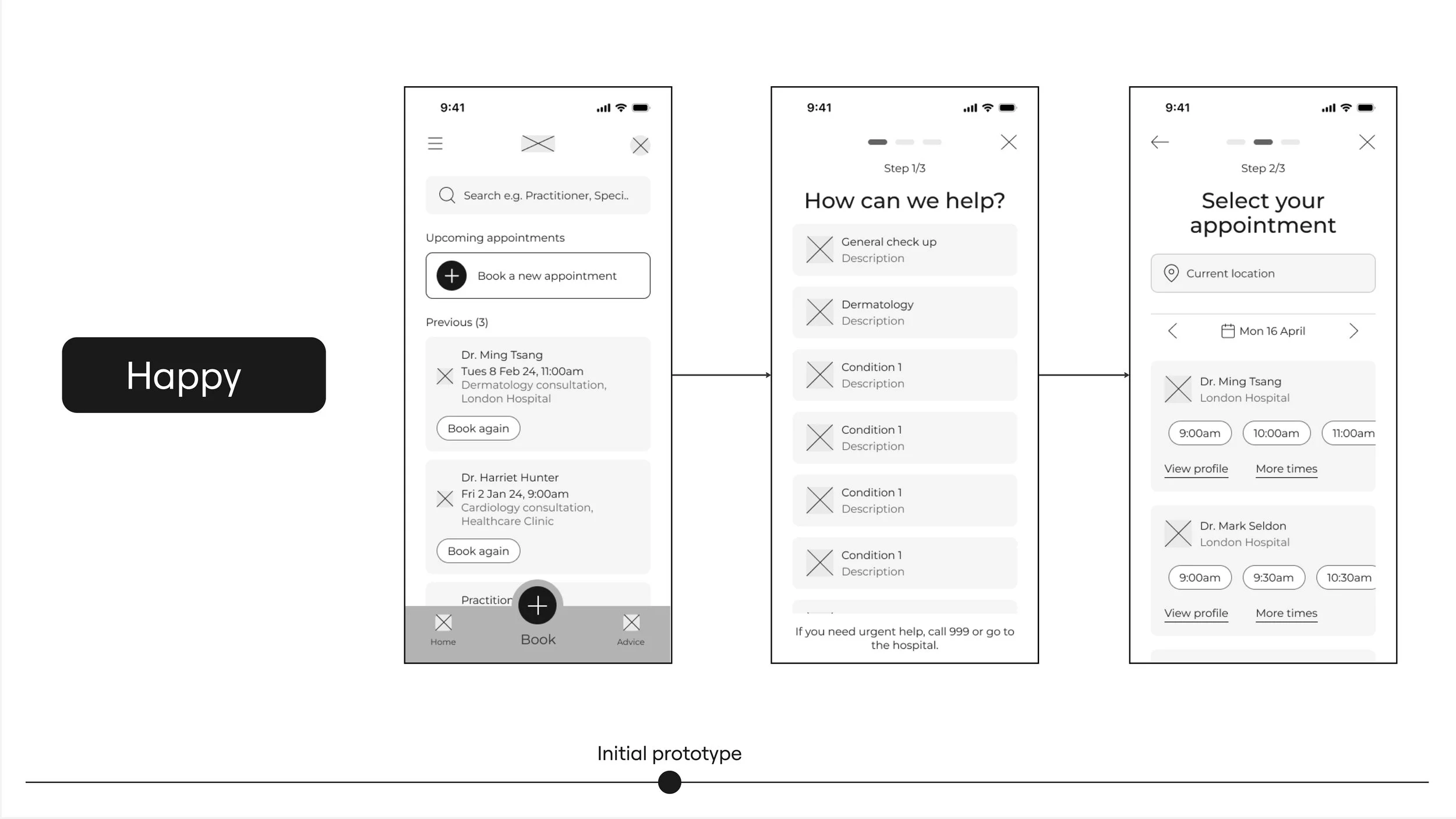

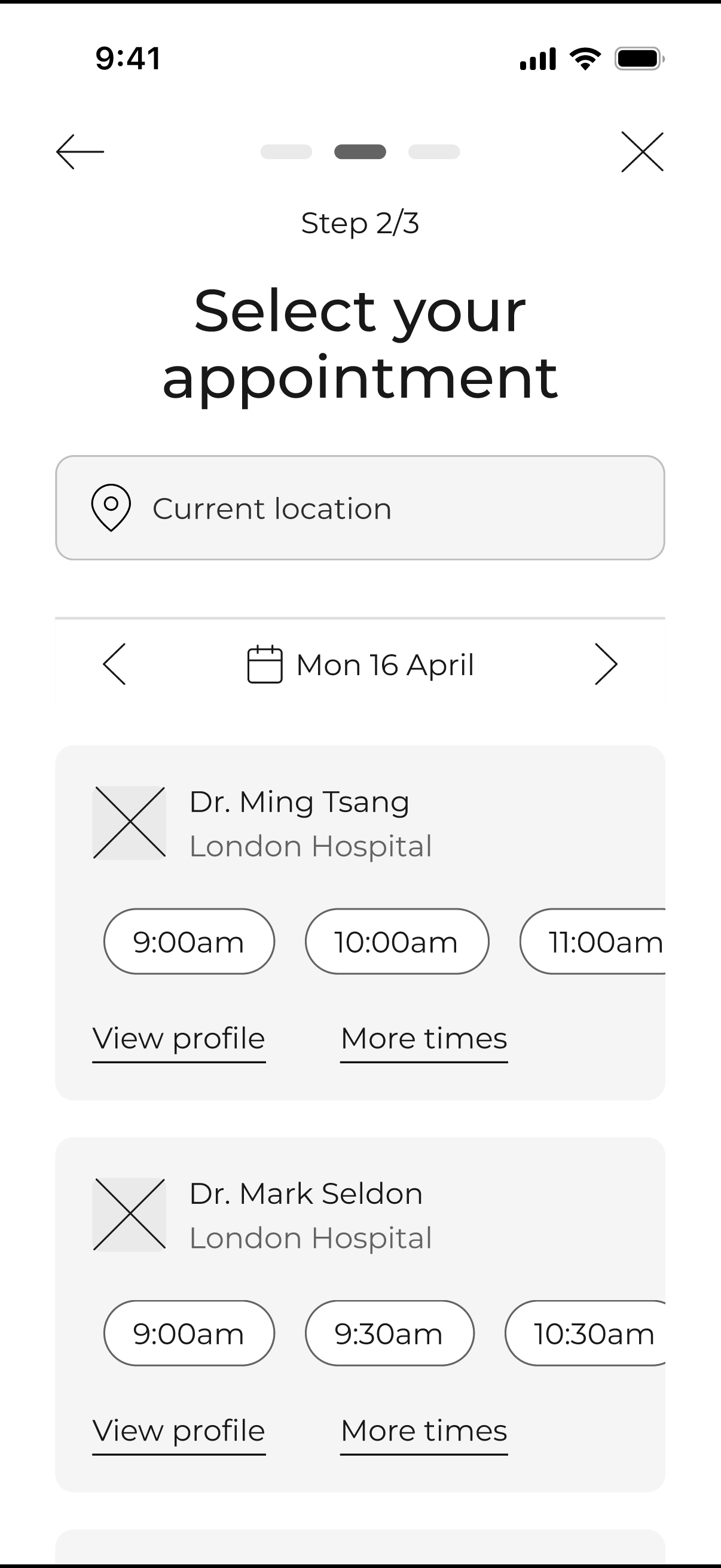
The ability to search by specialism or practitioner was foregrounded alongside the book again feature for returning patients with existing preferences.
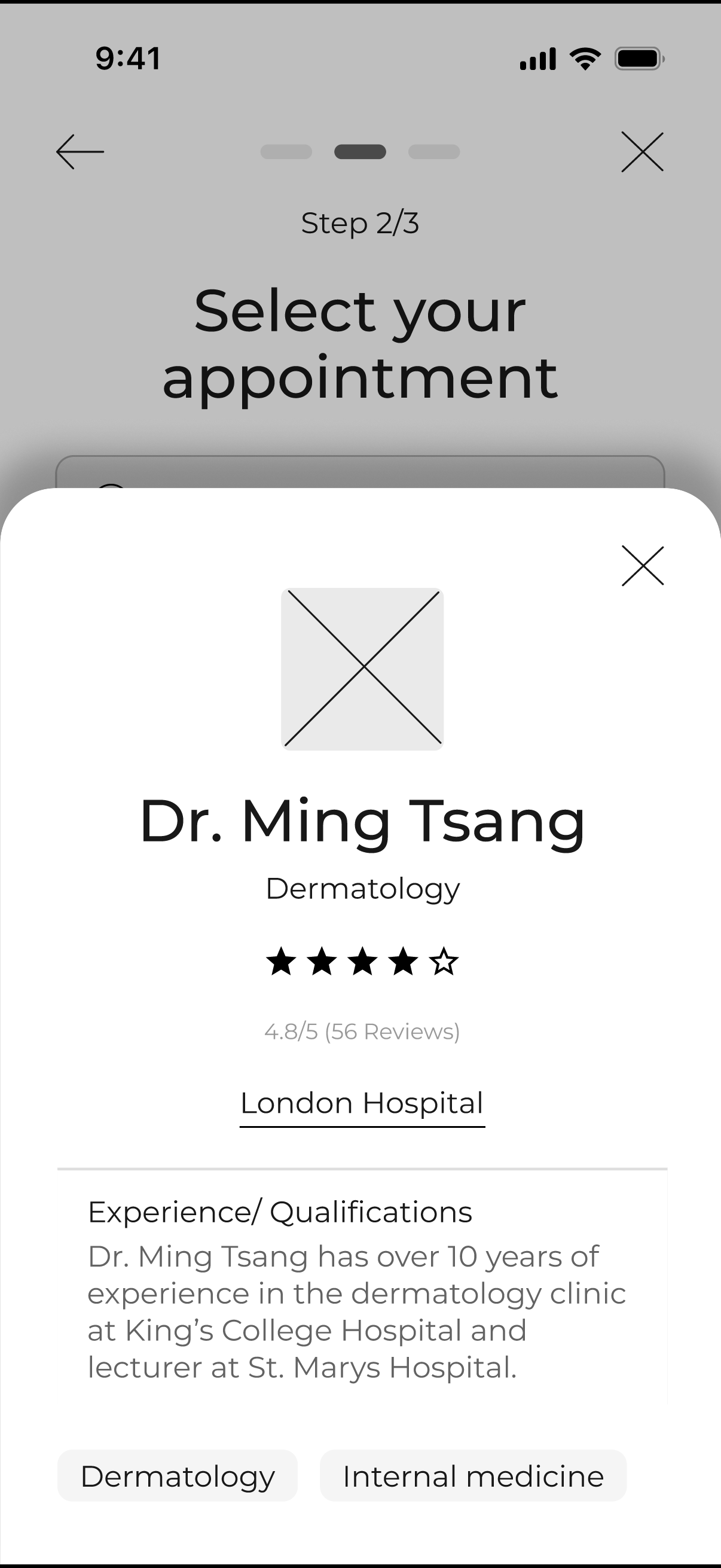
Patients can view information about conditions and practitioners, with rating systems for clinics and specialists displayed to provide a sense of choice and build confidence in patient decision-making.
The Next Steps area gives information about the appointment, what to bring and what to prepare for. Patients were given the option to provide additional information to the clinic/physician. A document system can later be tied to digital referral notes as these evolve.

Offering the ability to reschedule appointments was vital. Timely reminders support patients in managing time and clinics in managing resources.
The more that patients use the app, the more they are rewarded, gaining time-saving and reassurance that the clinic, physician, and digital platform are working in tandem to support their care.
Testing & Prioritising Findings
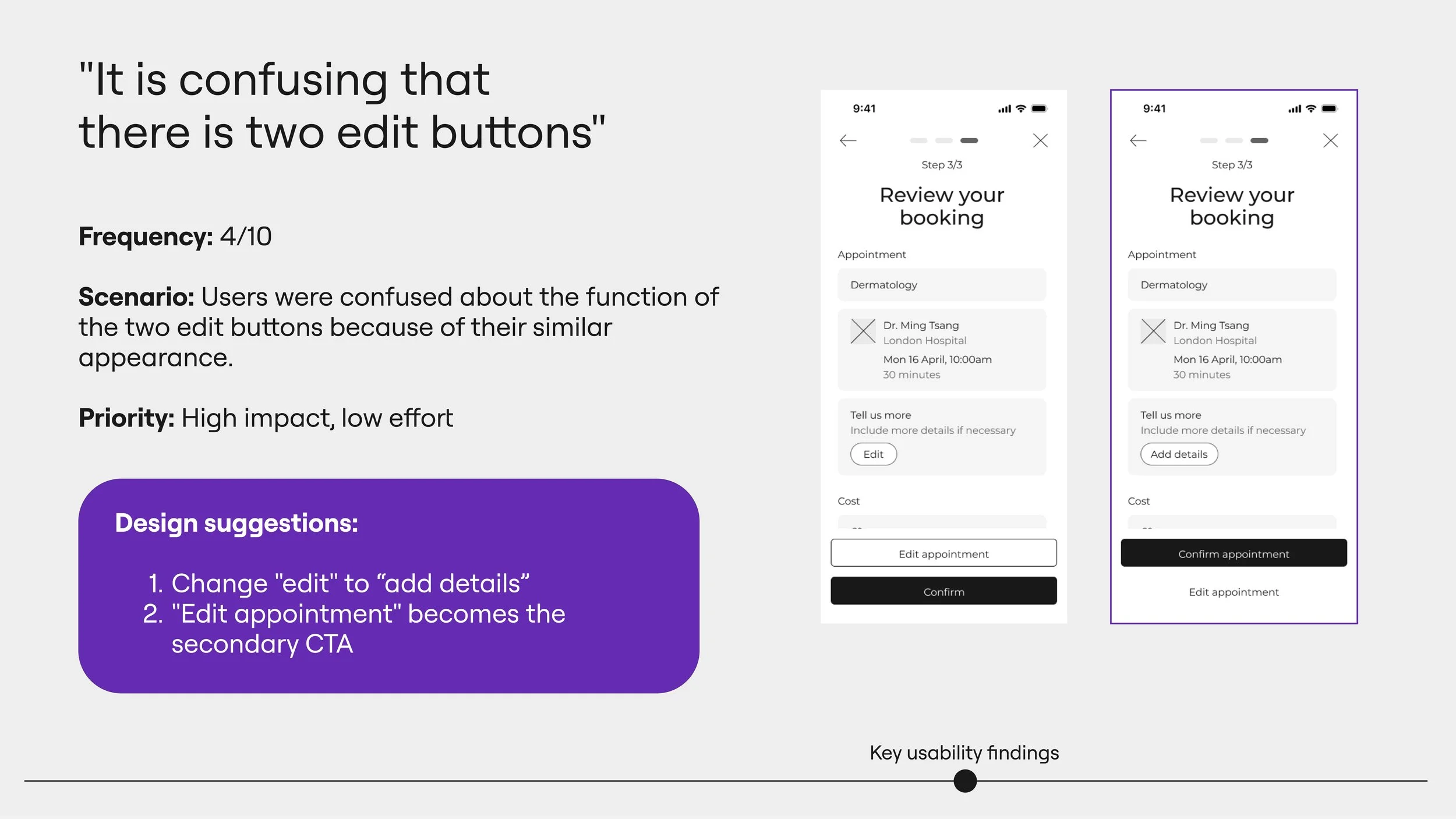
Additional clarity was gained through user testing. We were not just interested in task speed; we wanted to understand how users felt about the new process.
Did it offer them the assurances/comfort that they need?

Feelings were positive overall, and there was little friction in the process. There was considerable confidence in the task's completion, and users were surprised by how easy and fast the process was now. Most importantly, it left them feeling assured; in one case even ‘proud’ about doing it online.