Locomotion
Advisory for AI/VR
How do we design AI-mediated therapeutic experiences that build genuine psychological trust with cognitively vulnerable adults?
Using AI & XR, Locomotion aims to weave technology into the fabric of healthcare, like threads of empathy and insight. Its goal is to create a tapestry of care as unique and dynamic as each individual.
A current target for the company is to build an AutoGen framework using multi-agent teams to serve as a guide for older people navigating concerns about memory loss. This tool emerges amid the growing market for platform-based therapeutics for managing the onset of diseases such as Alzheimer’s.
In 2024, I joined Locomotion Ltd as an Advisor, providing research insights and strategic guidance to build a research environment for the platform. My research drew on a rigorous synthesis of the state-of-the-art literature across cognitive neuroscience, VR therapeutics, and AI-mediated care, interpreted through a psychoanalytic framework. This placed the focus on the unconscious dynamics of trust, memory, and identity that shape how cognitively vulnerable adults relate to technology.
Key questions included: How does a person experiencing early memory loss construct their sense of self? What conditions allow them to extend trust to a non-human guide? And how does the design of an AI agent shape an already fragile trust?
What the research revealed
Trust is relational, not transactional. Cognitively vulnerable adults do not extend trust to a system because it is accurate or efficient. They extend trust when they feel they are recognised and held. This has profound implications for how AI must behave, speak and respond to those who may be experiencing confusion or distress.
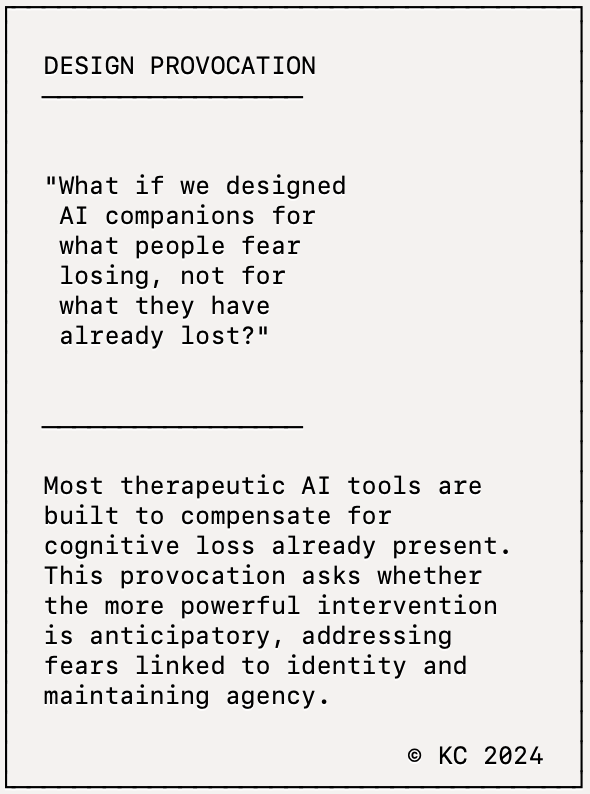
Memory loss is a crisis of identity. Drawing on psychoanalytic theory, the research highlighted that people's fears are less about forgetting facts than about losing a sense of self. The aim of an AI guide must be to support the whole person rather than targeting remembering facts alone.
A most effective model would likely be one that positions the AI as a compassionate witness rather than a director. Early framings of an AI as an authoritative guide risked replicating clinical power dynamics that research shows can increase anxiety and defensiveness in vulnerable users.
I translated these insights and offered expertise in psychoanalytic understanding to shape the platform and the business case for funding applications.
The research I provided supported my advisory work and the funding strategy as the company moved forward. The company has since gained recognition at global conferences and working groups, secured invitations to apply for multiple rounds of funding and established partnerships with universities.
Building bridges between technology & humans.