Habit Hero
Phase 1 - Analysis
Launching products to market with little time spent on evaluating user experience can lead to costly mistakes.
It is estimated that for every $1 invested in UX Design Research, companies can expect a return on investment of up to $100.*
Earlier research would likely have assisted the health insurance provider, Prime Care, in launching its behavioural change app, Habit Hero, a rewards-based system intended to support people in achieving their health and well-being goals.
Over several months (September 2023-March 2024), I conducted a comprehensive analysis and redesign of the application, drawing on insights from desk and field research. The company aimed to grow this base by up to 20% and increase engagement by 30%.
*Forrester Research, “The 6 Steps for Justifying Better UX, 2016.
Leaning in with a critical eye.
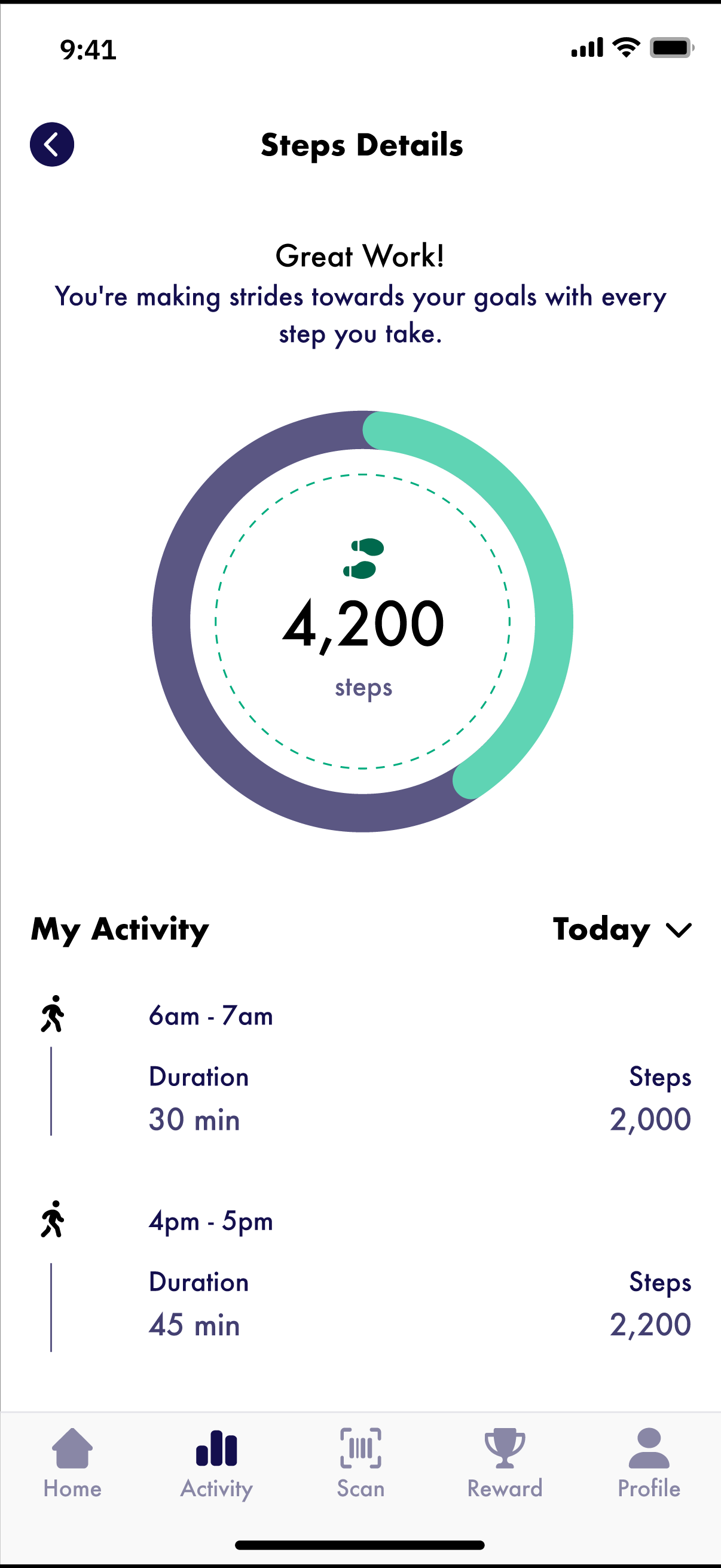
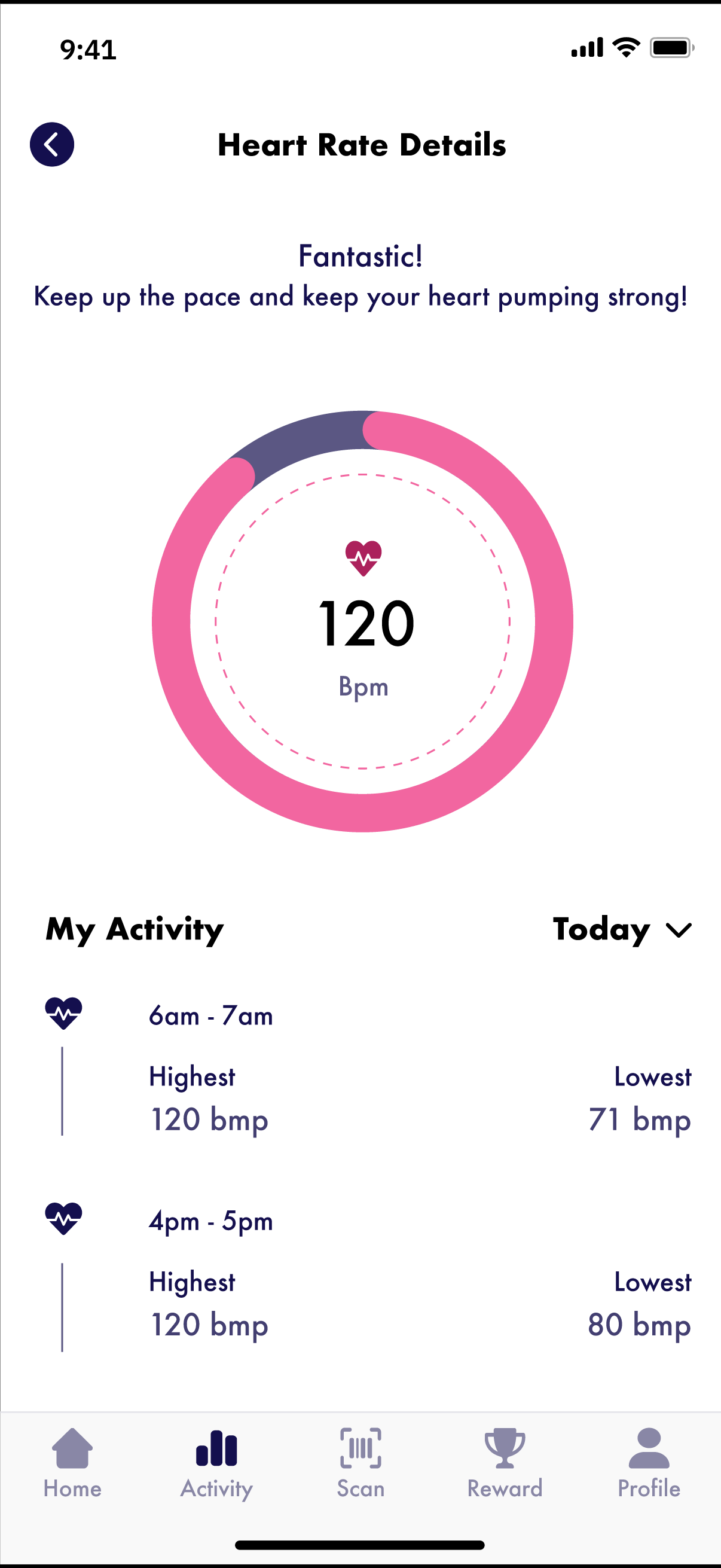
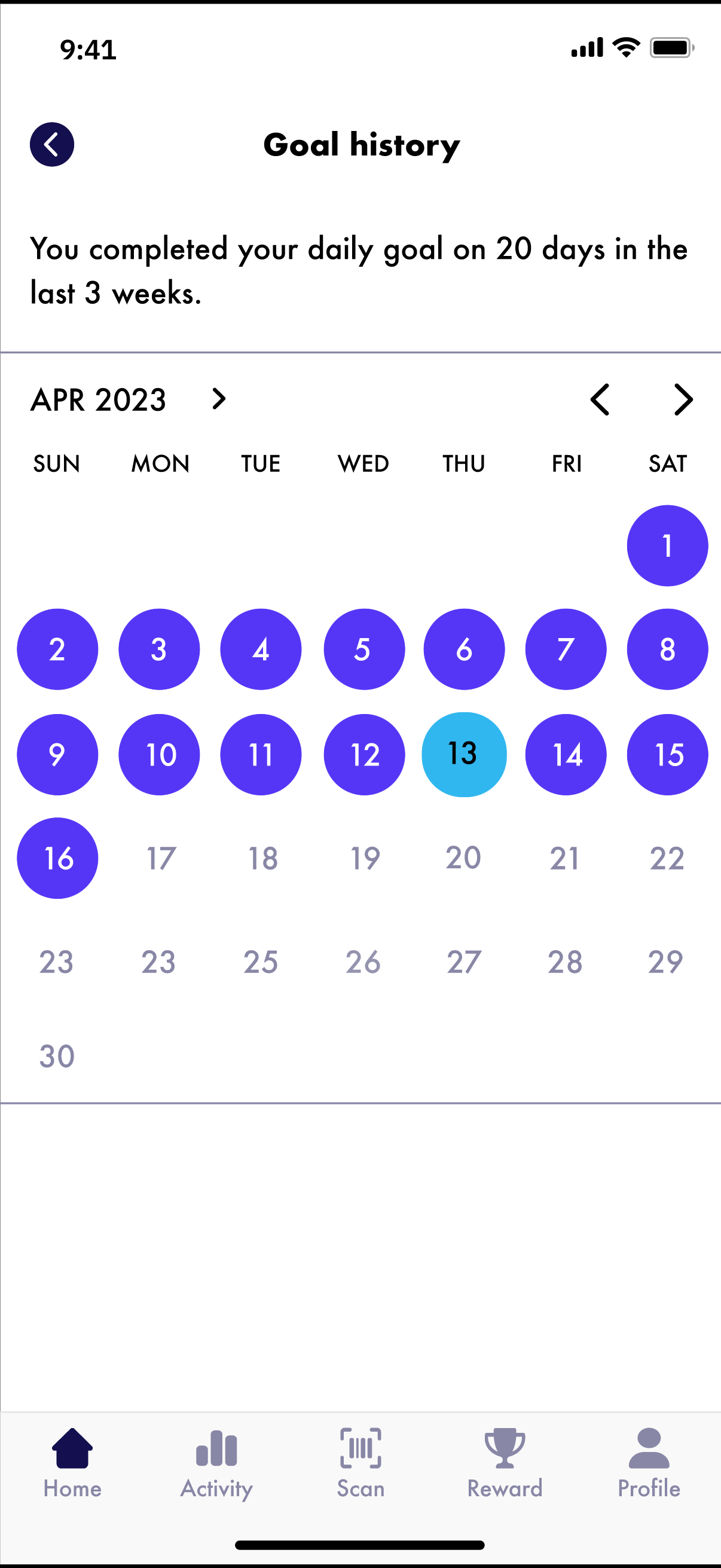
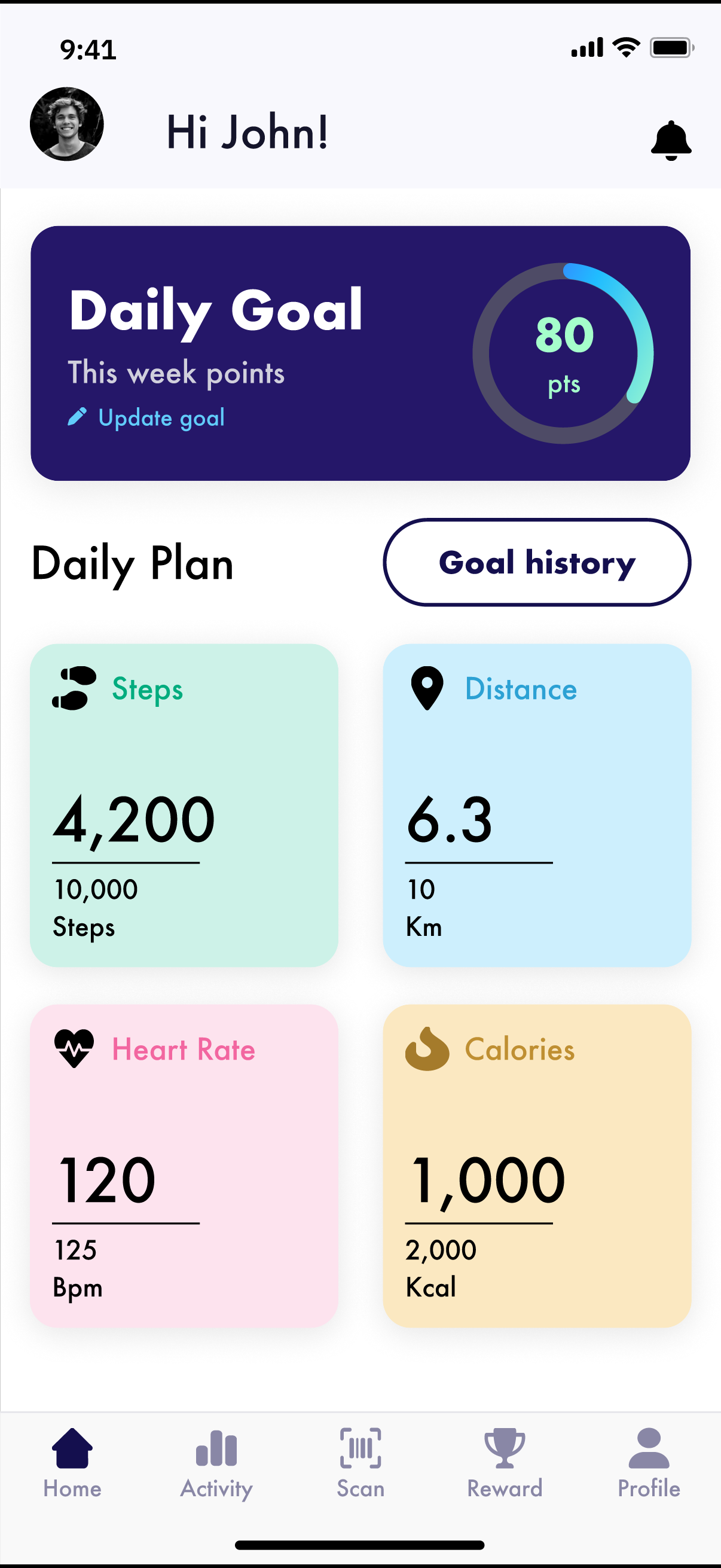
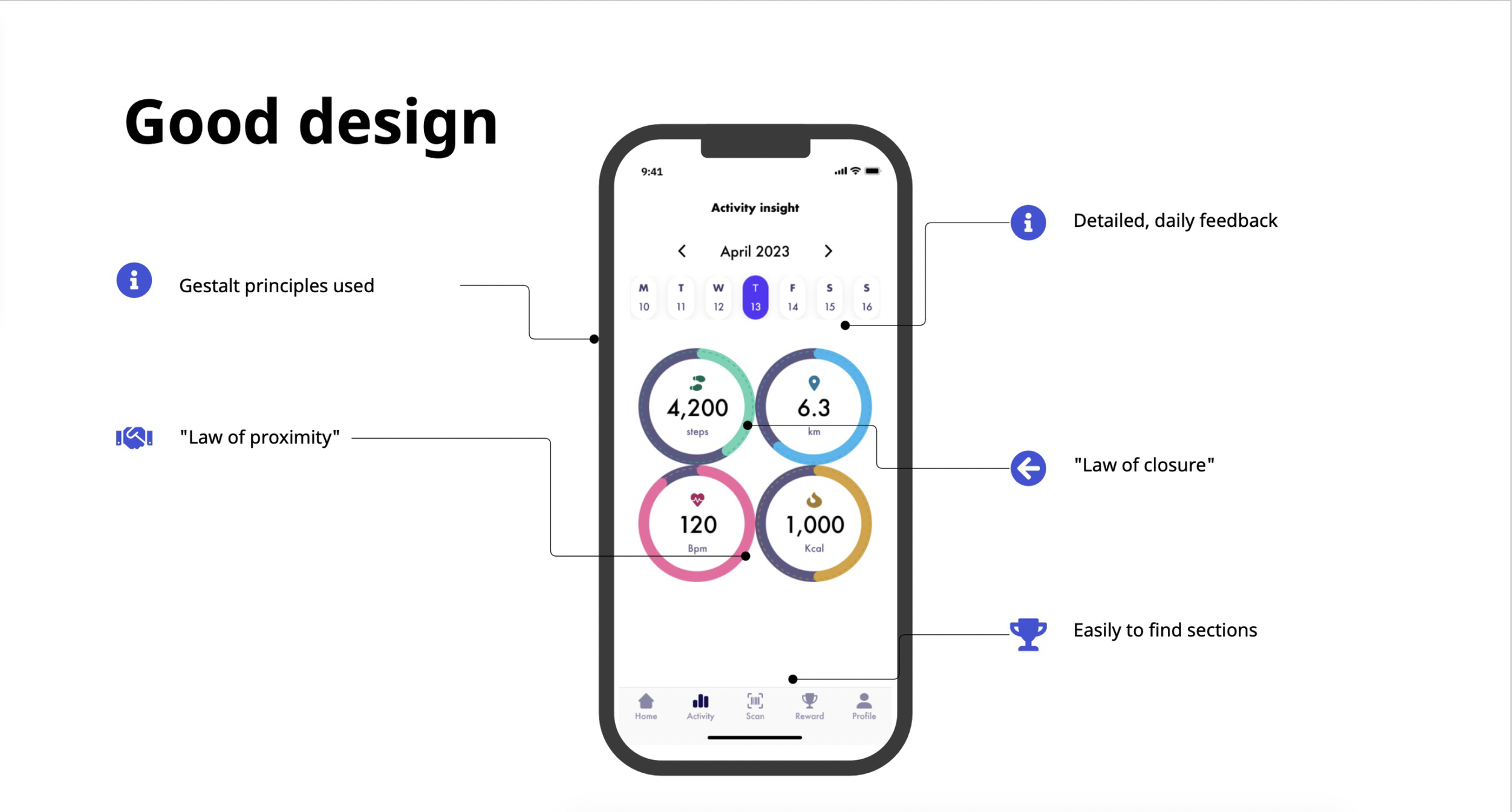
The target market for the app is educated and “tech-savvy” users aged 35-50 who are likely to be at greater risk of chronic disease. Some aspects of good design* familiar to this demographic were present in the existing Habit Hero app (e.g., the “law of closure” in the goal completion rings and the “law of proximity” in the grids), but overall, the app lacked coherence and alignment with user expectations.
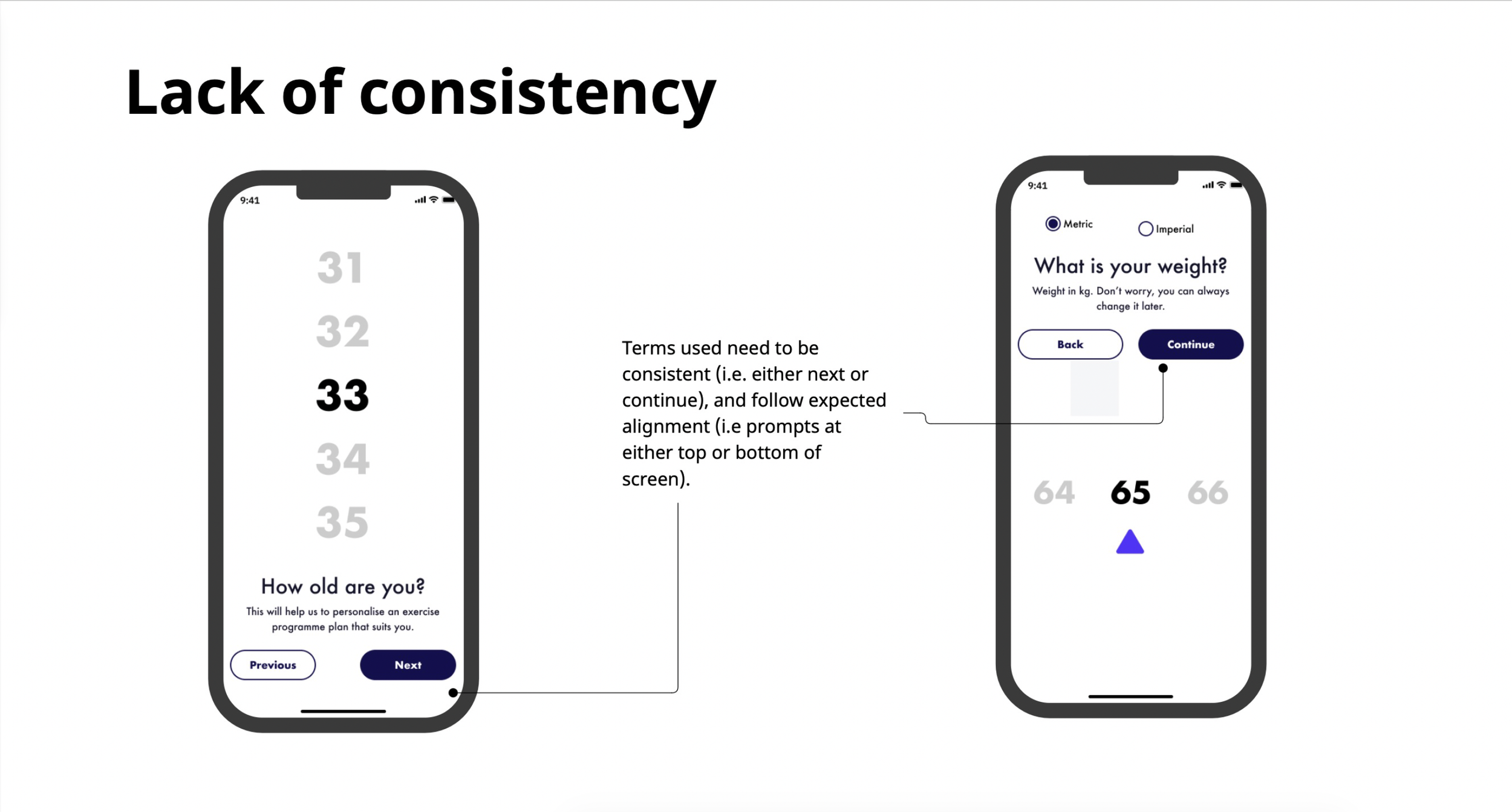
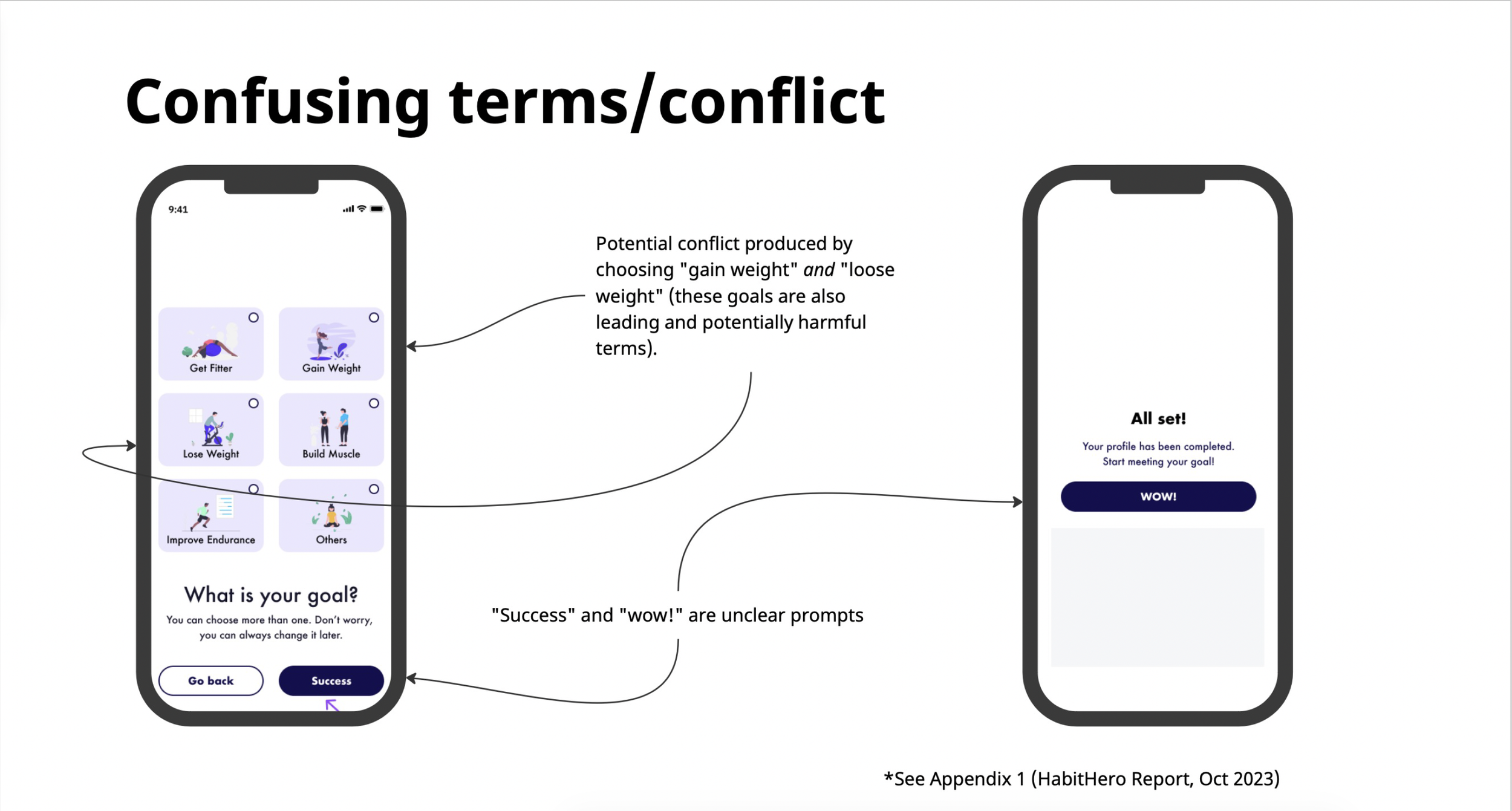
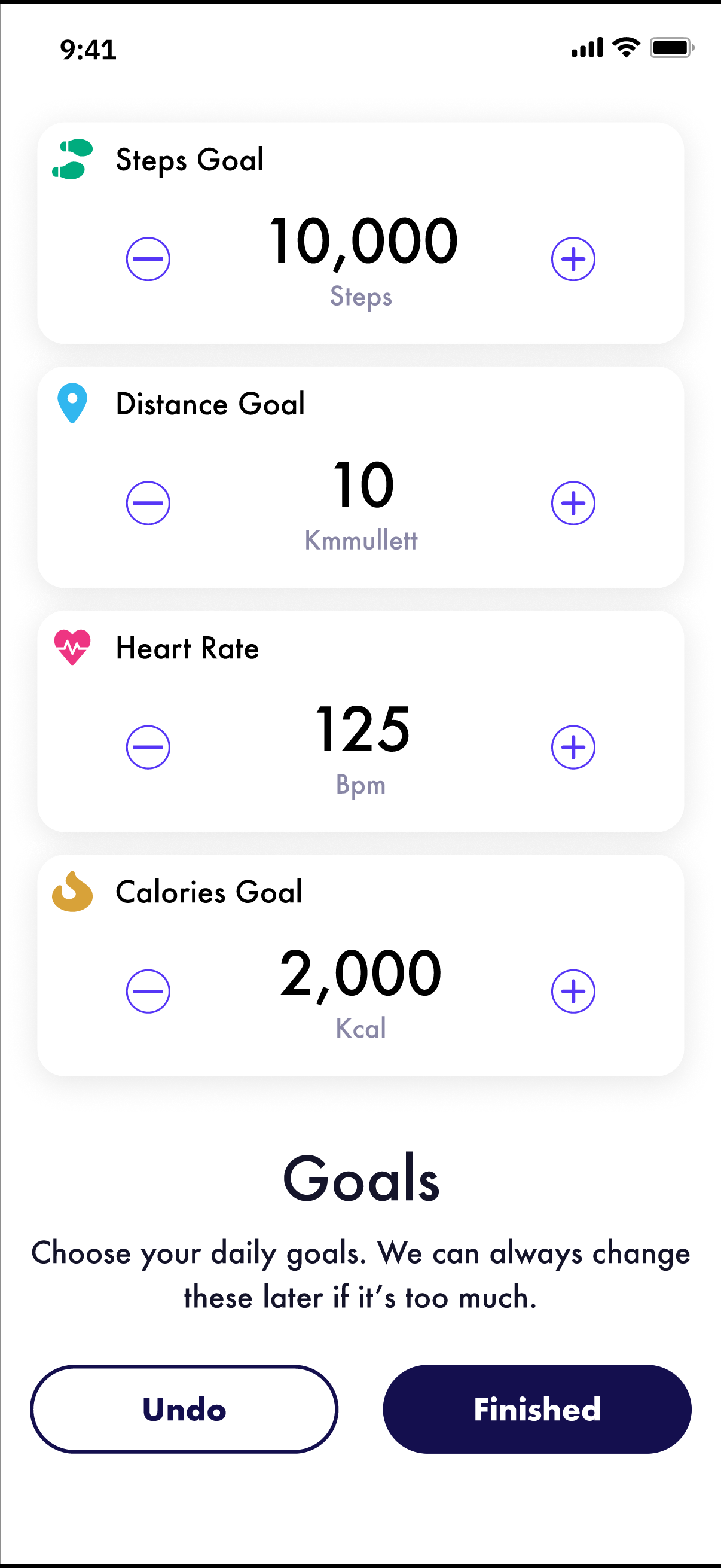
Simple changes would resolve poor use of hierarchies, inconsistent button layouts and signage, and confusing CTA terminology (e.g., use “next” or “continue” for completion buttons). Removing goal conflicts was also vital (e.g., “gaining weight” or “losing weight”). However, my analysis showed the app lacked the connective communication needed to help users build trust and foster deep engagement in the behavioural change features offered by the platform.
Transparency is the cornerstone
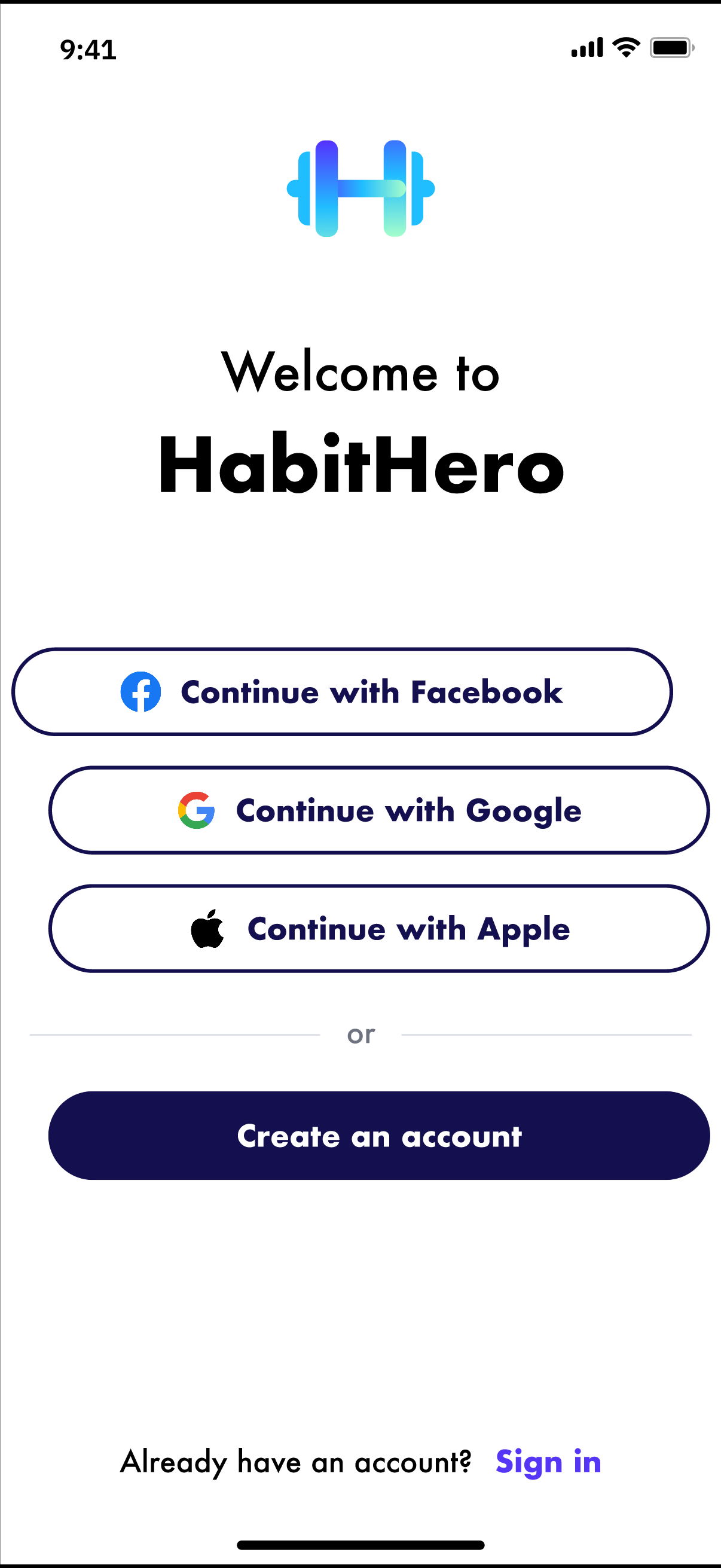
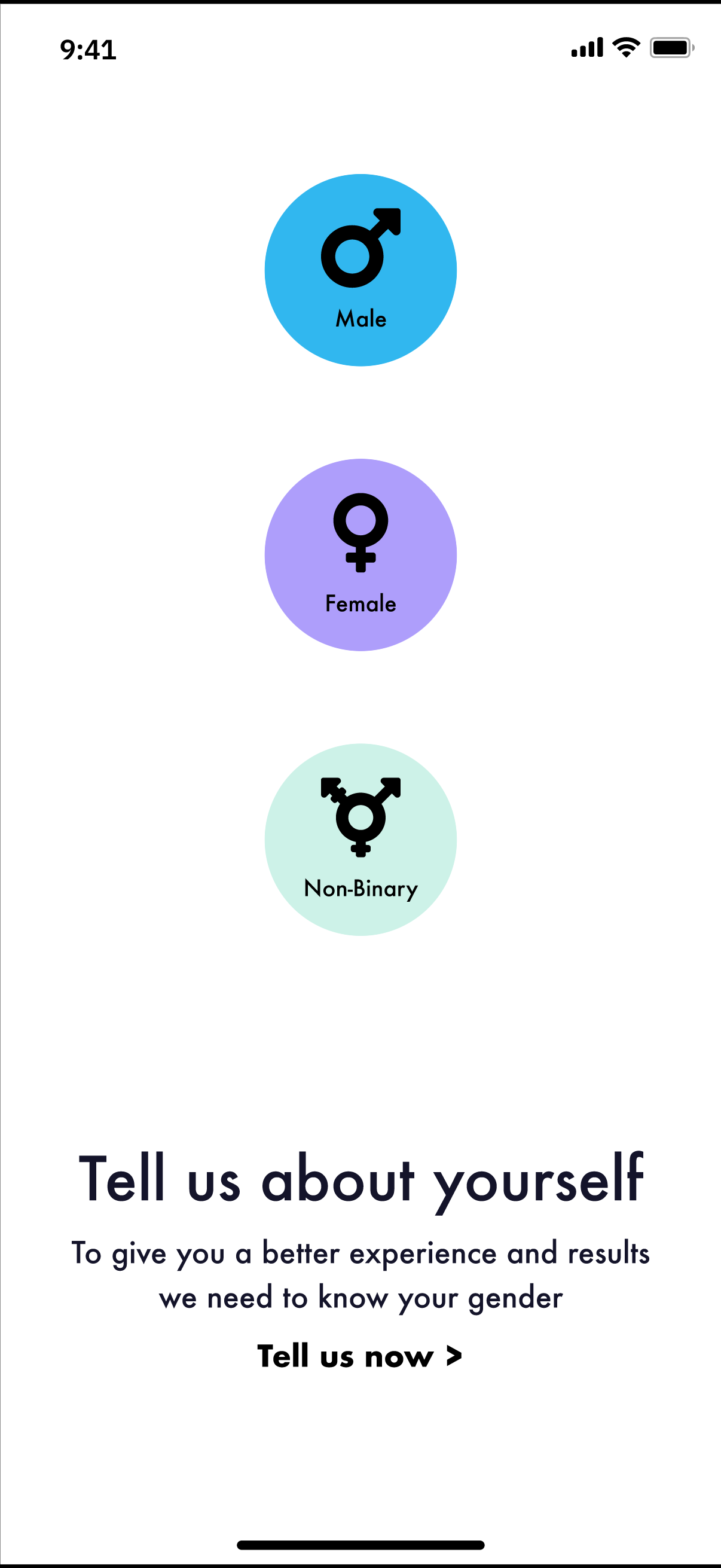
Upon sign-up, the app requested multiple personal details, including height, weight, and gender. Neither why this information was needed nor how it would be kept secure was explained, and there were no opt-out mechanisms.
Knowing the purpose of the information would allow the user to deepen their understanding of the app’s inner workings. Too much detail would hinder the experience, but just enough would cultivate a sense of insider knowledge.
Learning from vital signs
Visualising proximity to goal completion can serve as a motivator, but when exploring achievements over time, a macro view is needed to establish a sense of change.
Learning can be supported by charts that depict progress and show a more dynamic relationship between factors. Users learn from systems as they build. But they may also need additional support, guidance, and mentoring to relate meaningfully to these visualisations and make use of them.
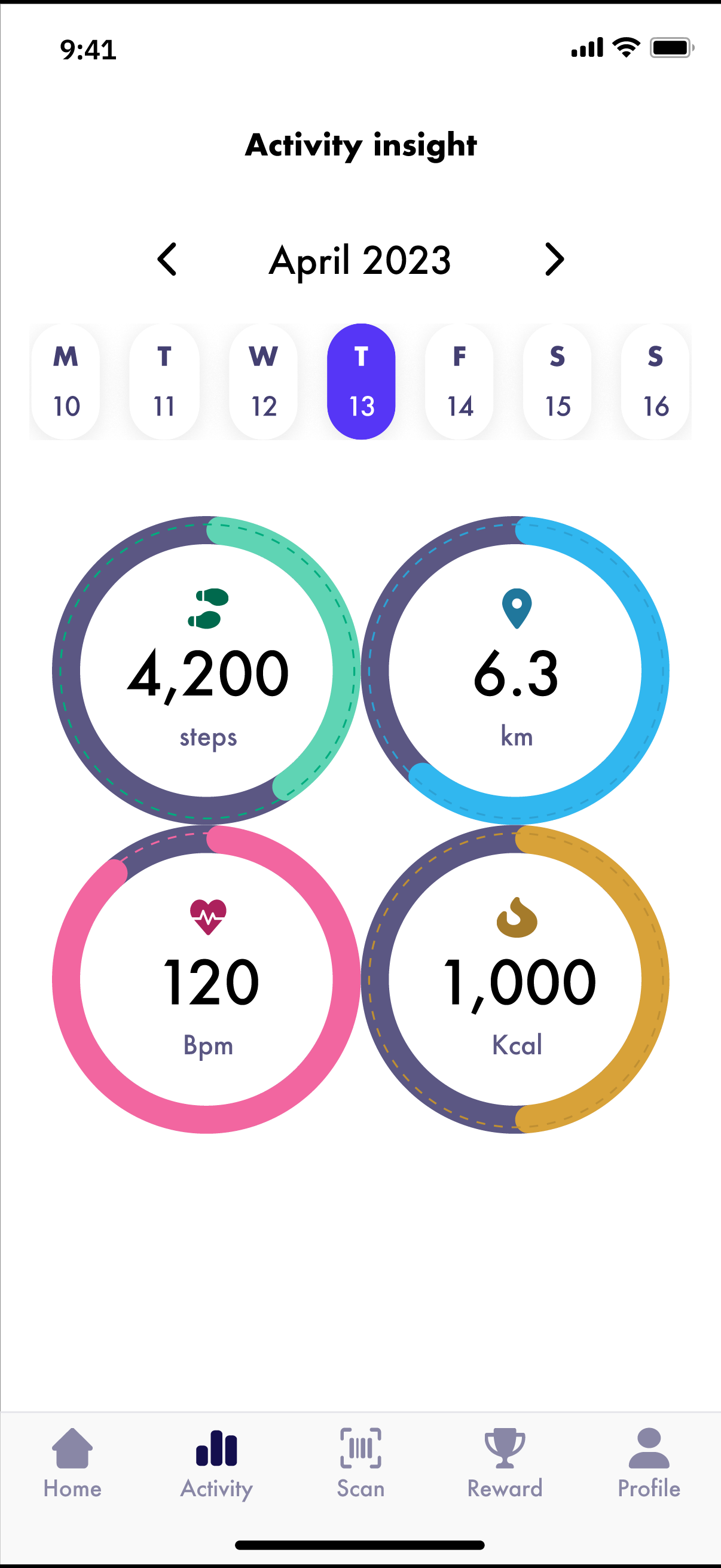
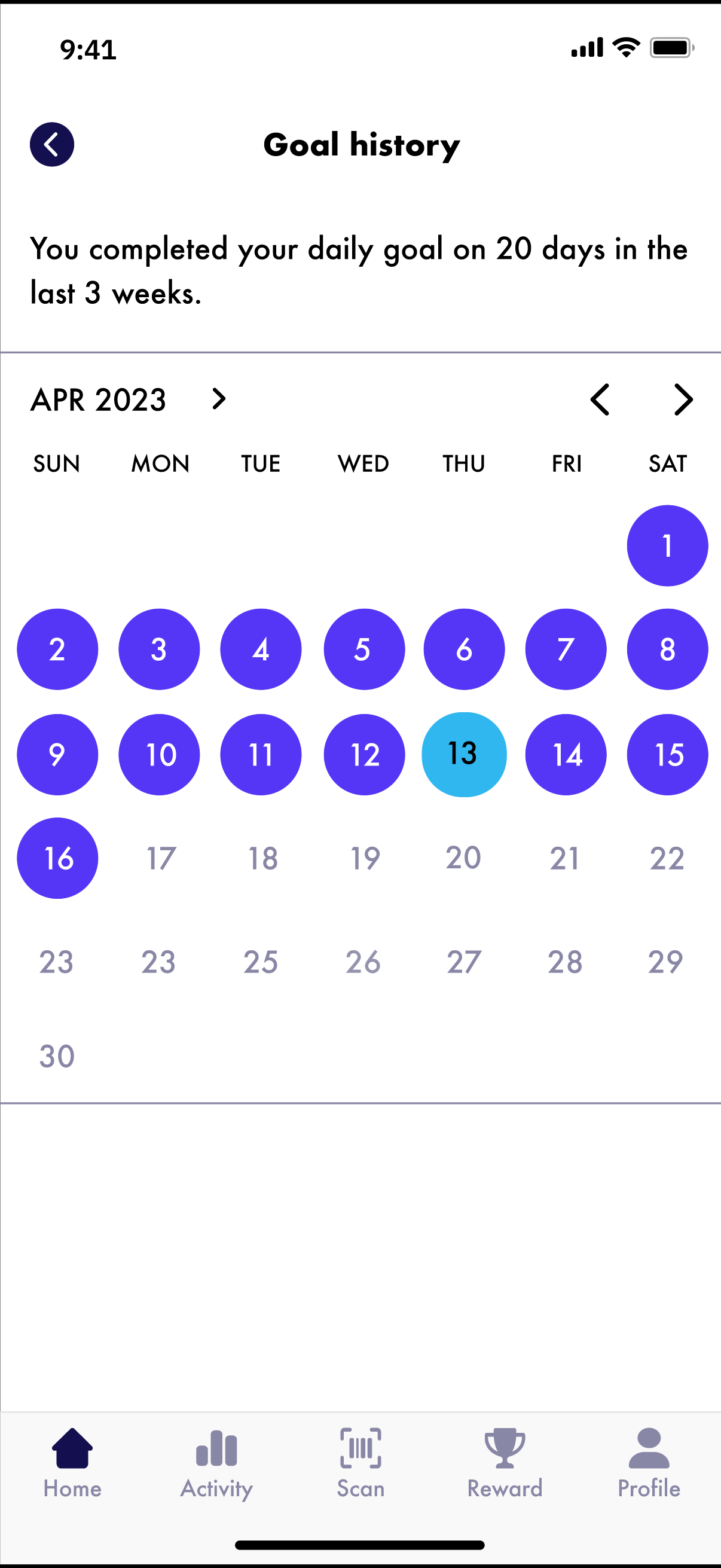
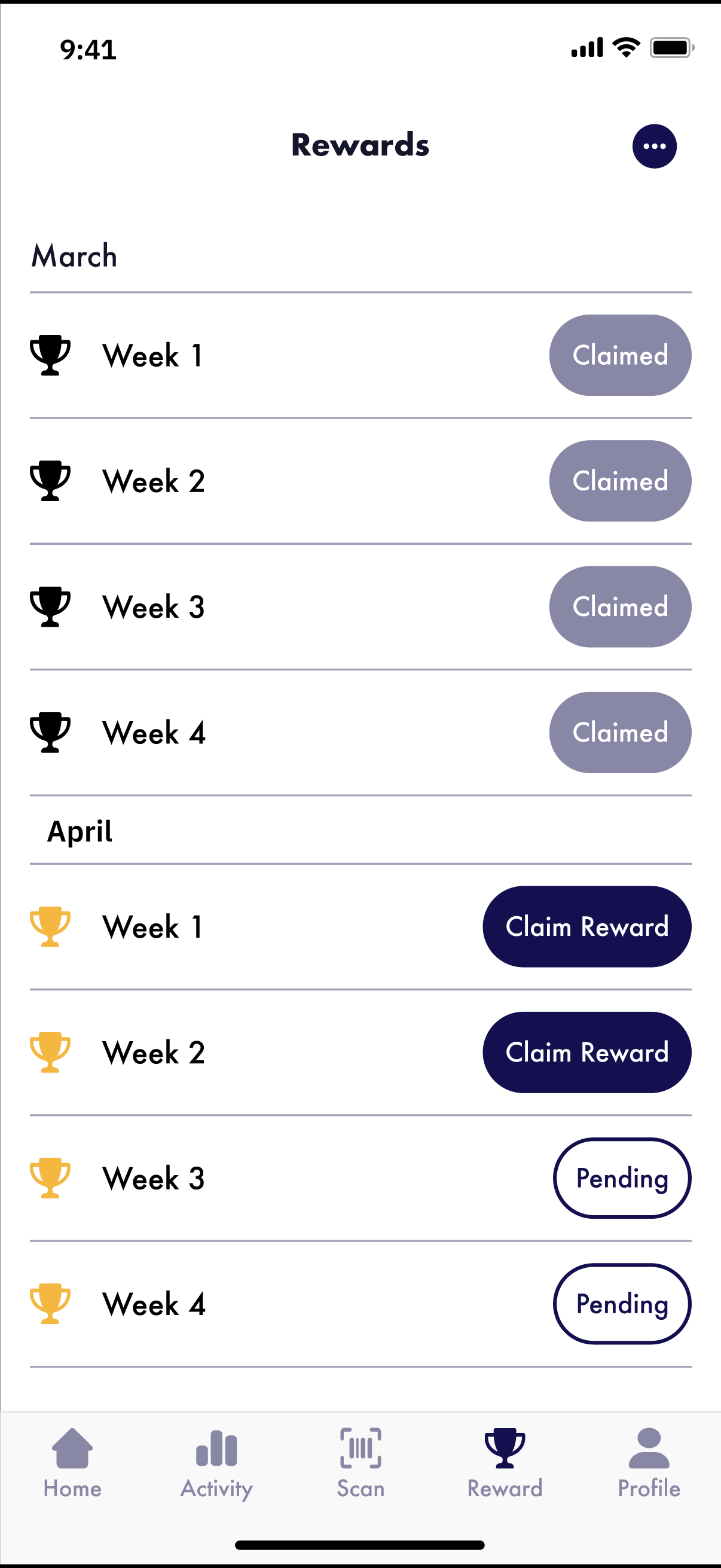
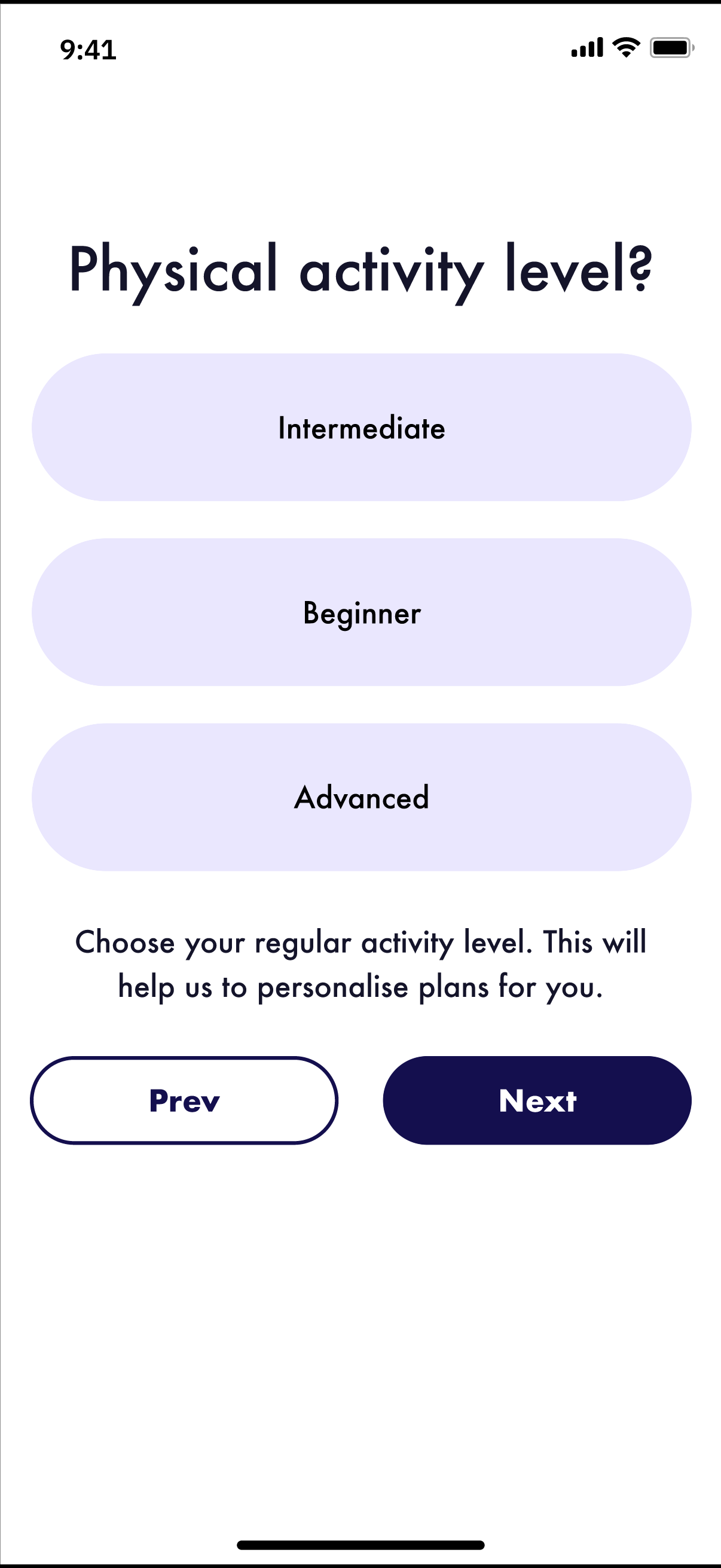
Habit Hero could better support goal-setting by educating users on the correlation between health signals and their progress toward their goals. Moreover, the link between daily activity and the rewards achieved needed to be clearer, with a stronger sense of fostering an individualised learning path and a sense of change over time.
How do users understand what all of these terms and visuals mean within the Habit Hero ecosystem without having any information? How can they relate?
Moving beyond the desk, my field work included reflective observations of app use in action to find out. The project also included interviews with users to mitigate any assumptions the designers might make.
Missed learning opportunities
Establishing healthy habits requires a learning process. I could see that the app, in its current state, failed to support such a journey. It operated under a number of assumptions, that:
a) Users know what goals and targets to set, and
b) They were able to make judgments about their own status in relation to such terms as “Beginner,” “Intermediate,” and “Advanced.”
Habit Hero
Phase 2 - Listening for signs
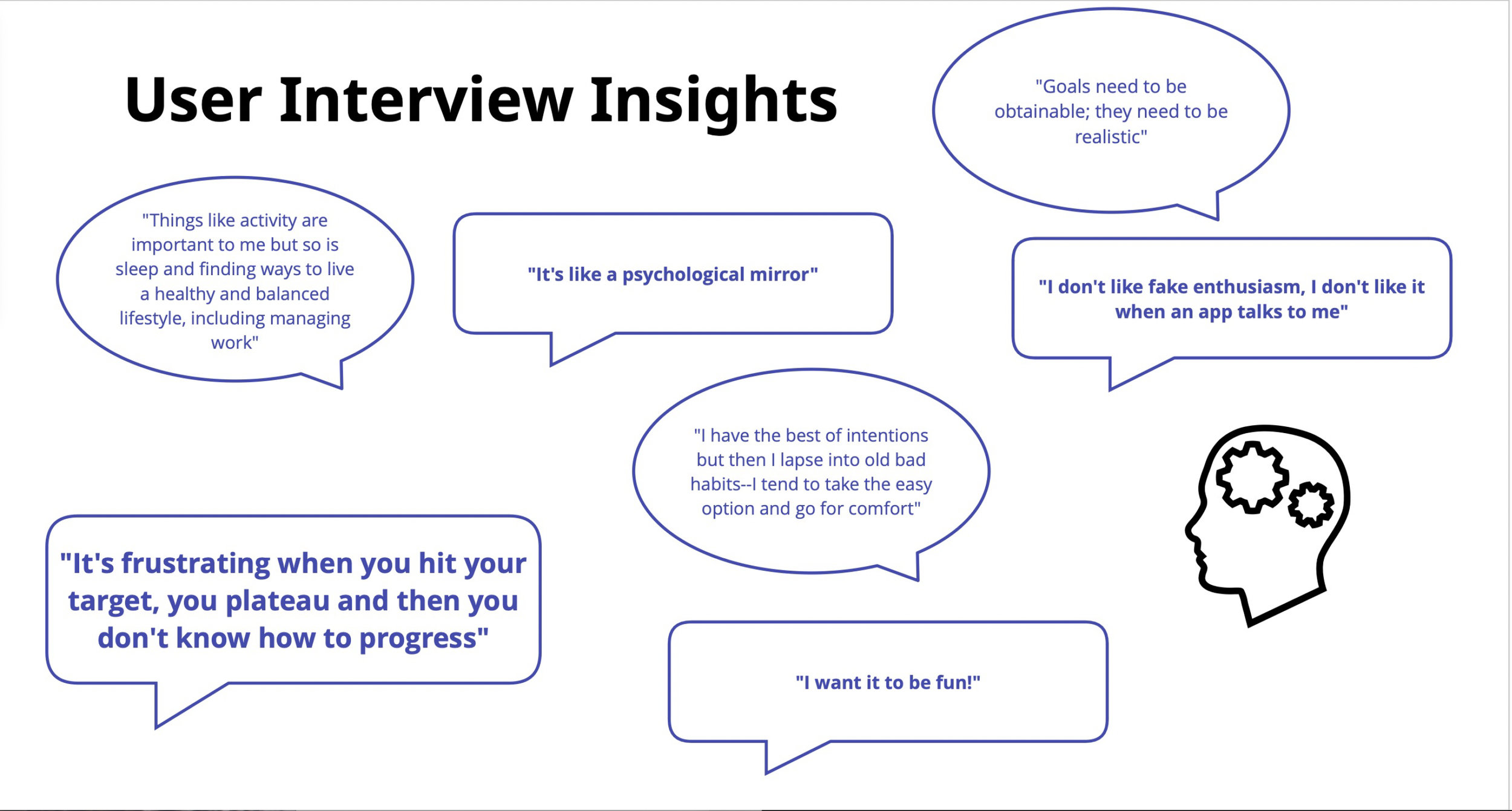
Listening for signs and revising the “hero” concept.
McKinsey & Co.* reports that a strategy focused on improving the experience of existing customers can deliver breakthrough growth, often more than double that of industry peers who fail to focus on this area. Good user research and aligned design actions can tip the balance toward keeping customers feeling cared for and, therefore, engaged.
The insurance company Prime Care had assumed that its behavioural change app, Habit Hero, was failing to gain traction because it needed to provide users with a more dynamic and personalised experience for setting and monitoring their goals. This assumption required more rigorous testing.
Desk research (see Phase 1) revealed other issues. There were obvious flaws in the design. Some were surface-level and could be resolved by UI improvements. However, a more fundamental issue with the design was brought to light by user interviews.
*Bough et al., ‘Experience-led growth: a new way to create value’, 23 March 2023.
Being alive to lived experience
To understand how users related to the current system, I conducted observational interviews in which users showed me the path they had charted through the app.
Listening for signs also meant being attuned to lived experience and to social and cultural contexts, recognising that there is no “perfect user.” A new persona emerged, displacing the previously assumed primary user, who was much more likely to be burdened by life’s responsibilities but also the one most likely to benefit from Prime Care’s support.
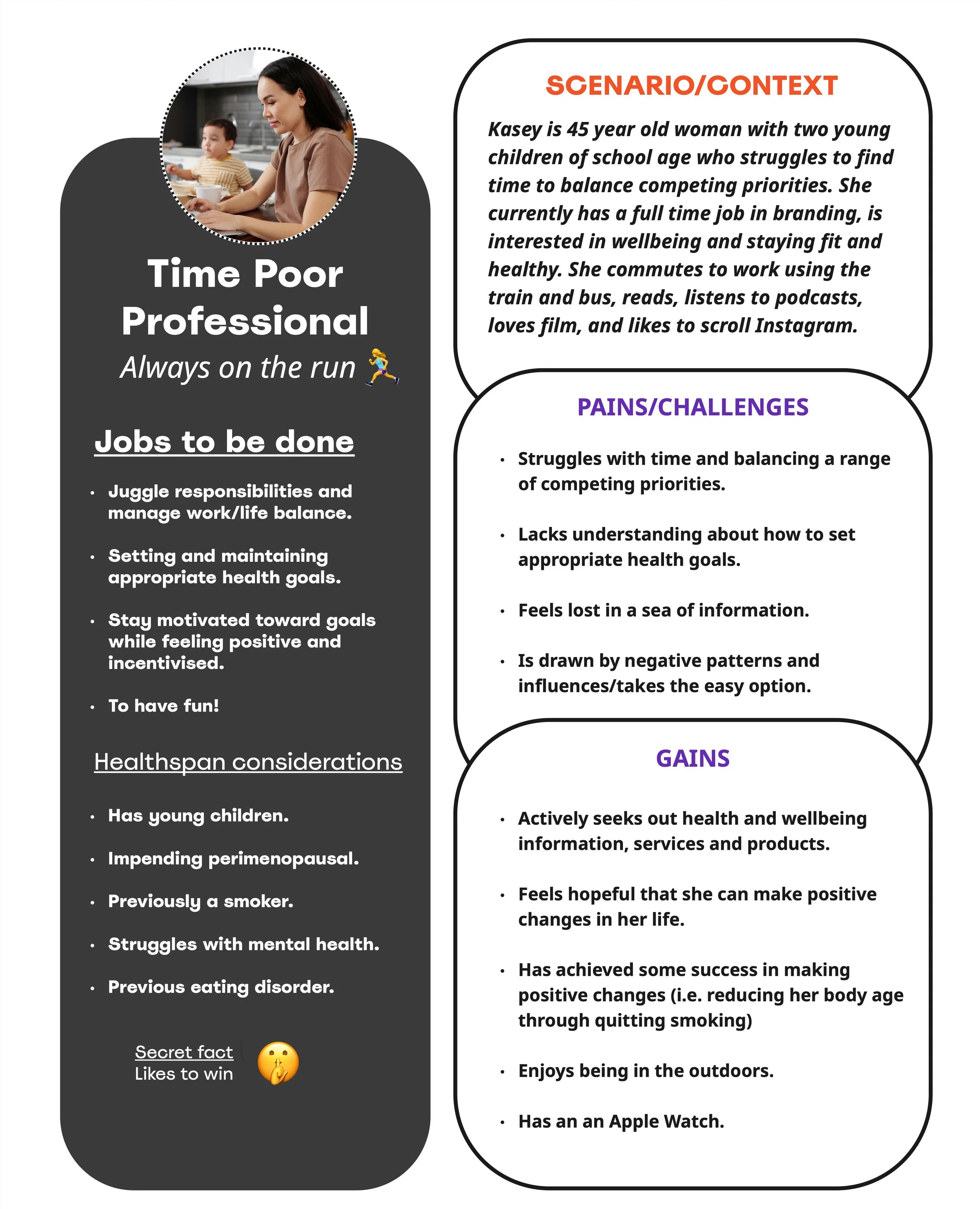
Accounting for failure
The cold-lean design of the current app proved alienating to some. This was not just about the UI; it was also evident in responses about how the app related to users and how it made them feel. One user said that she didn’t like it when an app “spoke” to her; it was clarified that this meant a kind of fake enthusiasm.
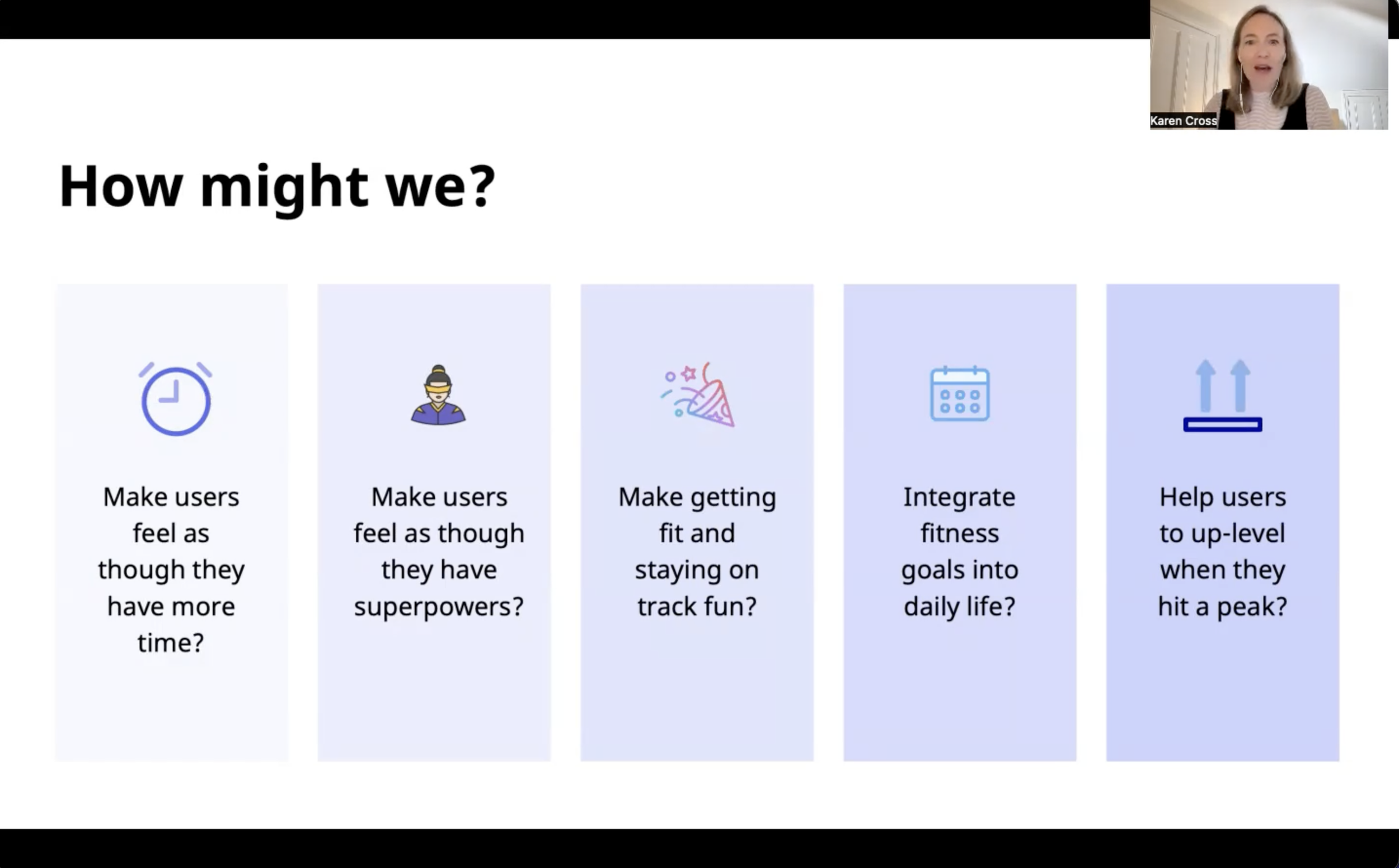
Any guidance systems to be embedded in the app needed to strike the right tone; presenting my findings to stakeholders, I suggested that an altogether different vision of the hero was required.
Habit Hero
Phase 3 - Revisioning the hero concept

A “hero’s” journey for better health.
Just as there is no such thing as a perfect human, there is no set pathway to success. Western visions of success are culturally flawed, so we need to craft for imperfection and challenge.
Success should be premised on the natural and inevitable part of any journey toward greatness—the necessary encounter with failure.
(To clarify, these failures should only be the user's and never the app's!)
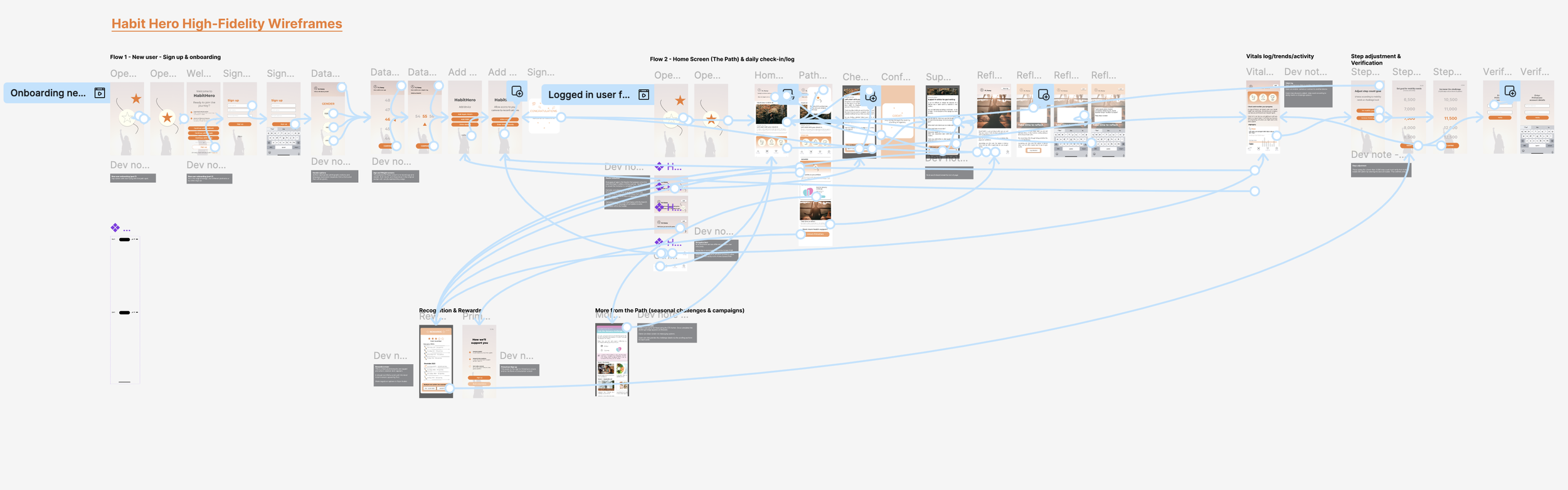
My new prototype integrated lessons from Phase 1, which focused on analysing the existing frames and their missing components, and from Phase 2, during which I listened to users’ experiences to identify what would best support them in their journey.
We need to craft for imperfection and challenge.
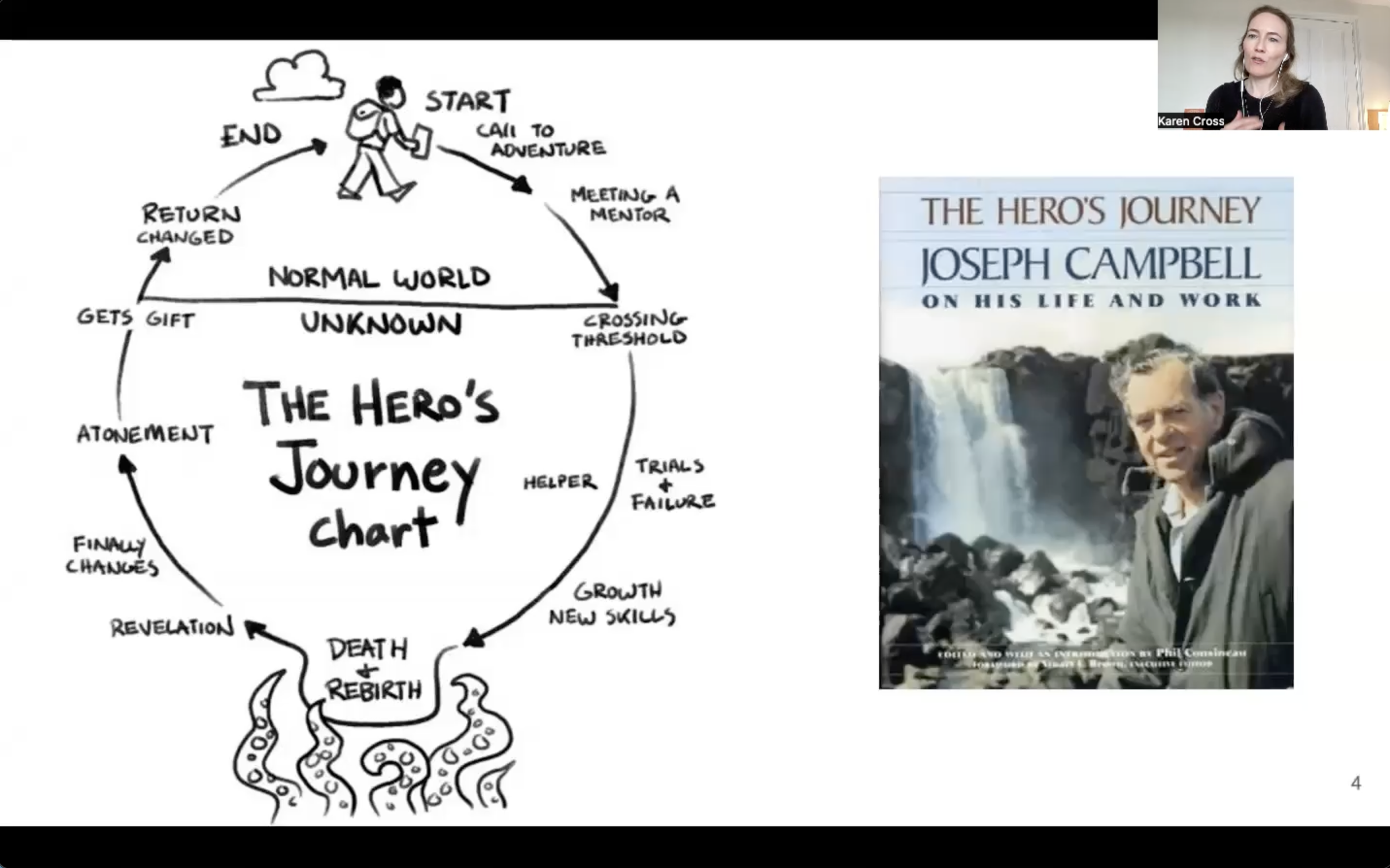
Drawing on Joseph Campbell’s* idea of the “hero’s journey,” I kept a naturally hindered path in mind when ideating the new prototype.
My goal was to create something that would speak to my newly identified user, who was more likely to need a tone that was forgiving and empathetic—perhaps even a witness to her struggles.
Establishing Trust
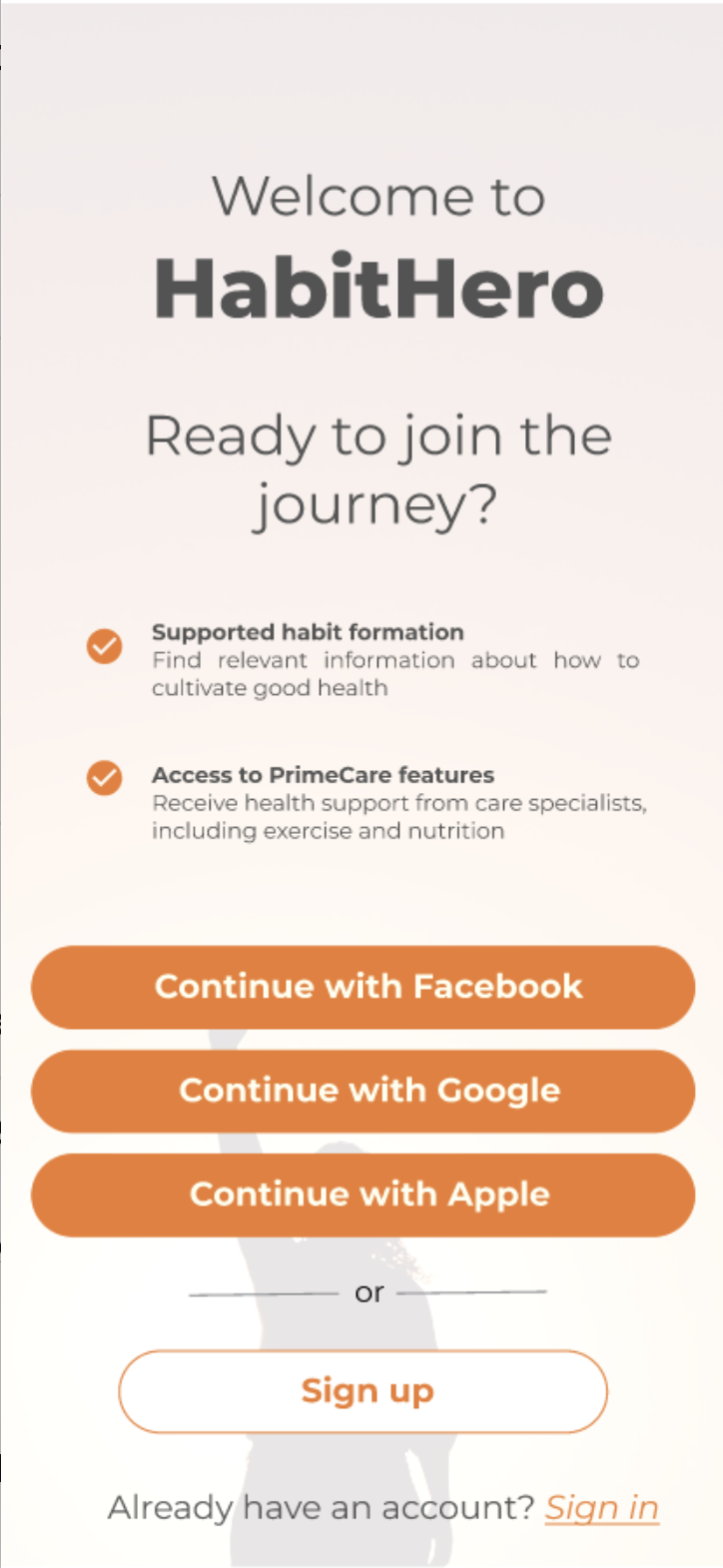

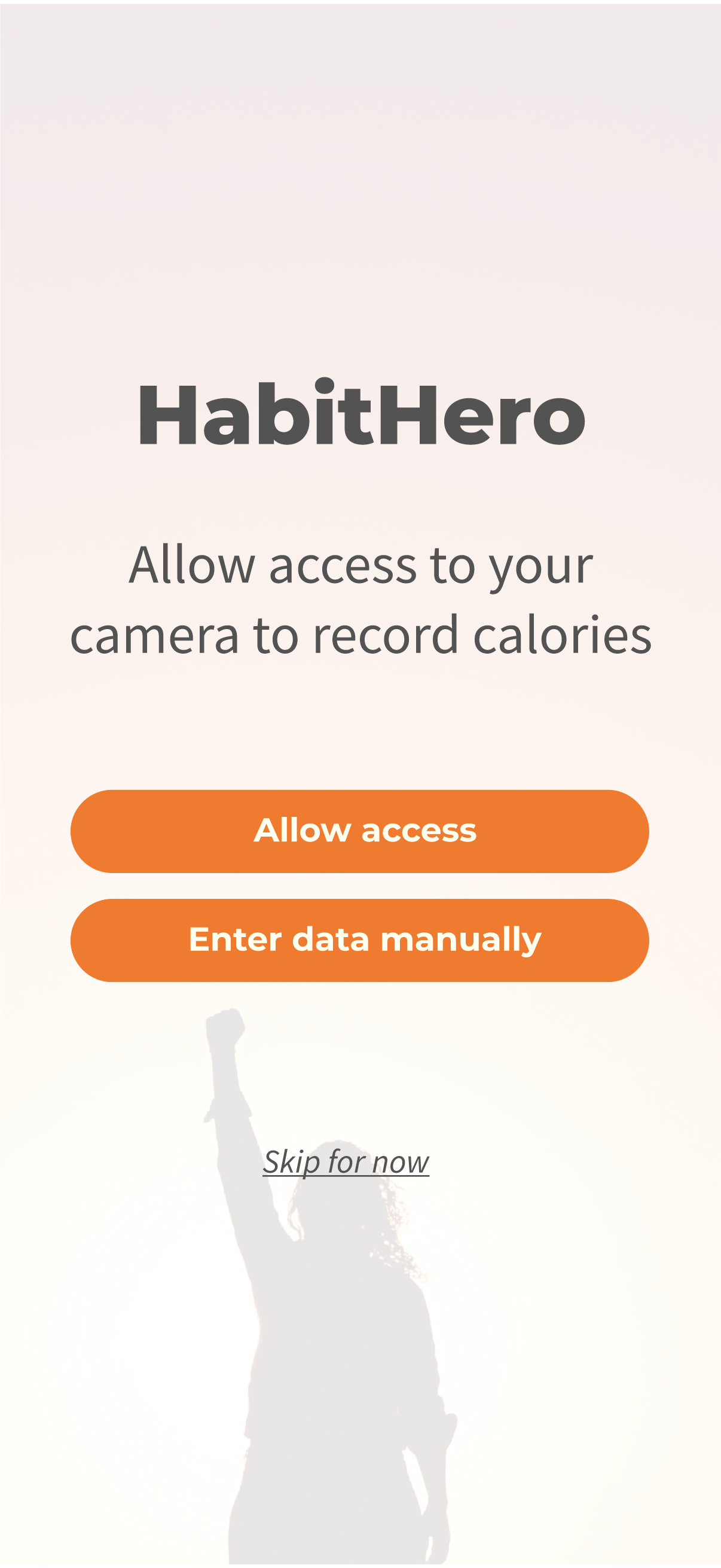
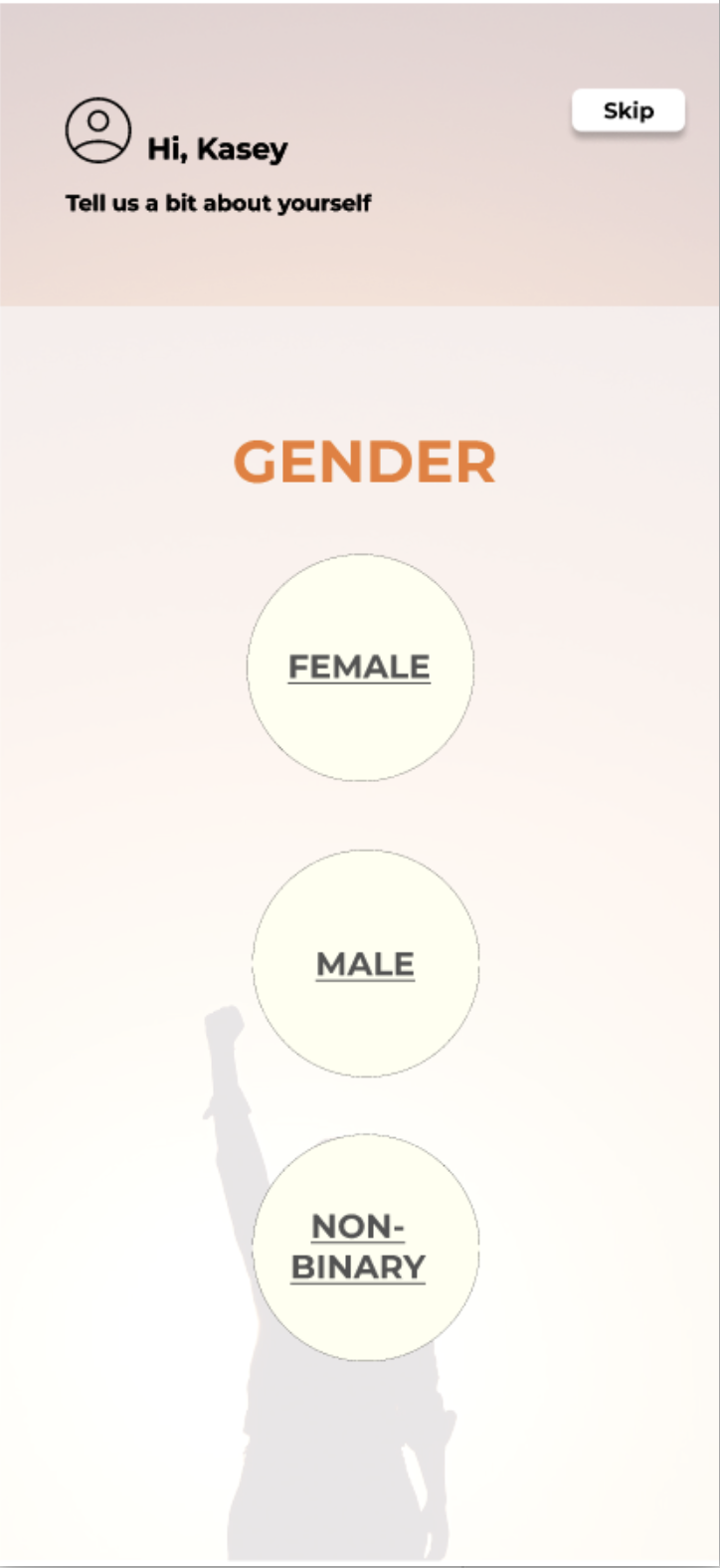
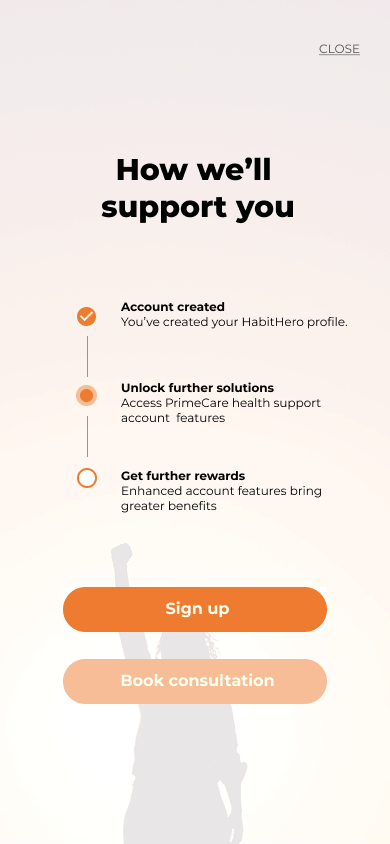
Humanising the design was a core part of building a connection with the user. Of course, this was possible through a more relatable UI and choosing phrases that engaged the user’s agency. Options to skip steps were added, establishing control, and more obvious consents were built into the sign-up and onboarding stages.
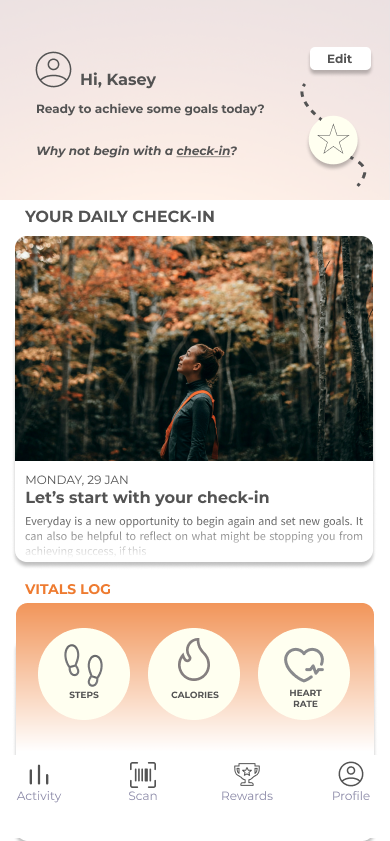
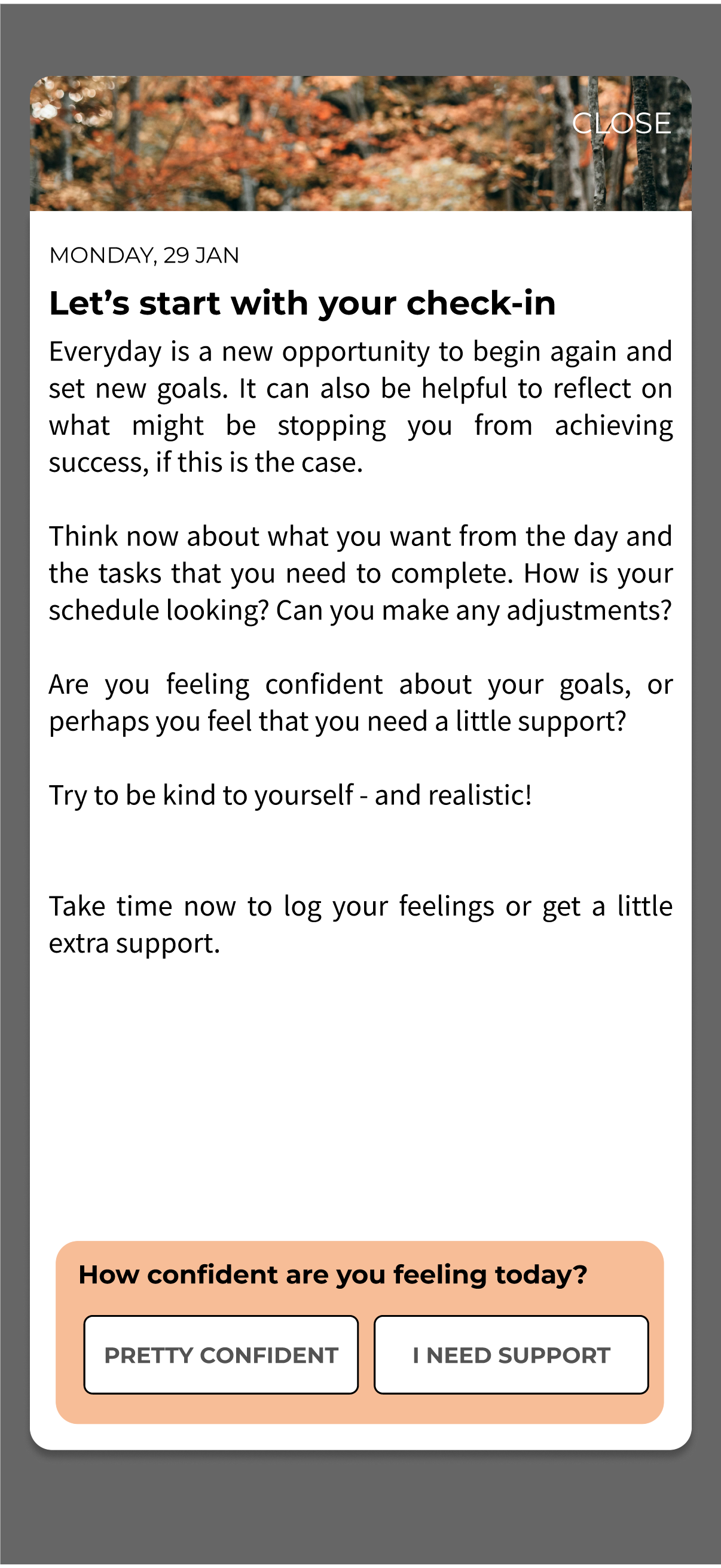
A daily check-in and speaking to the user as a supportive mentor, with options to engage built in, would strike the right tone, offering a helpful sense of presence while keeping control in the user's hands. The aim was to make the user feel seen and held on their own terms.
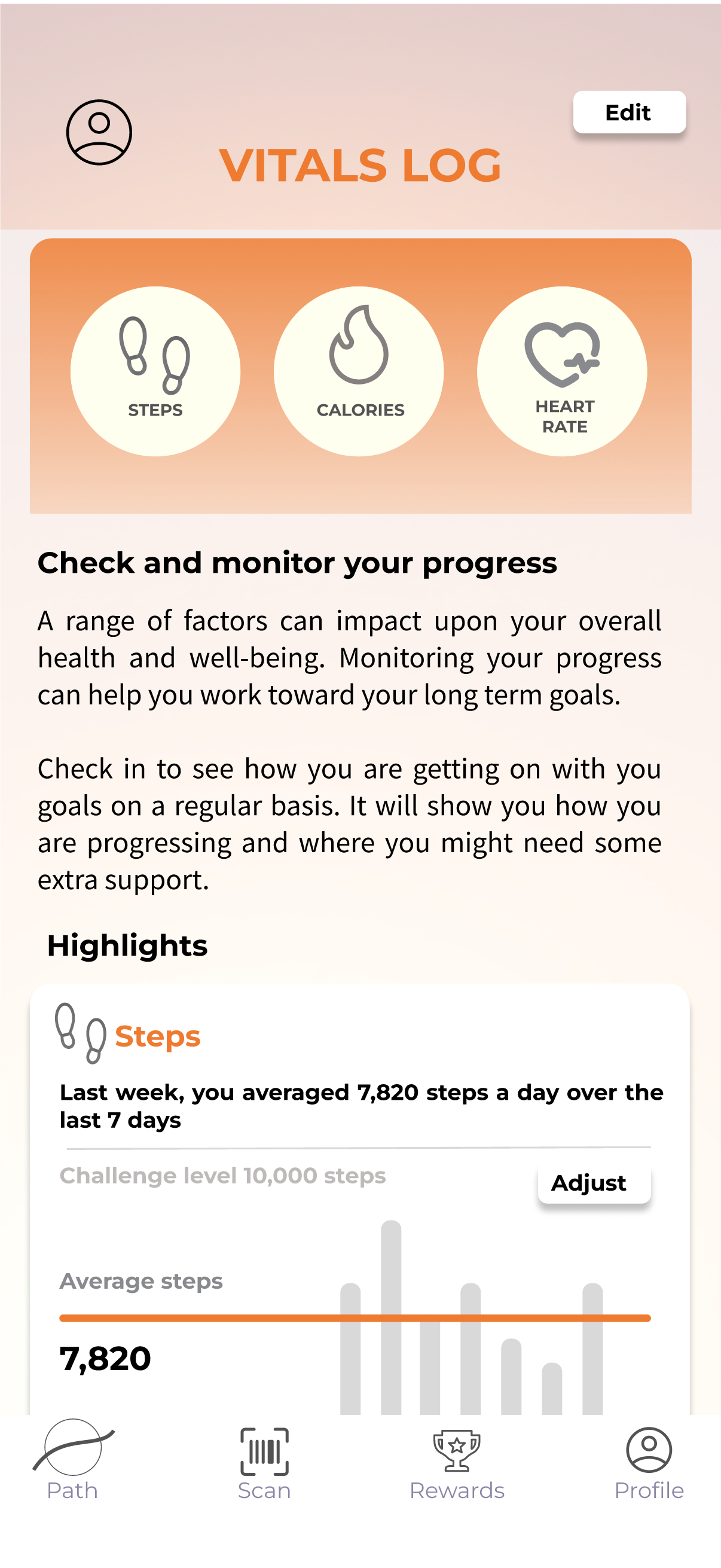
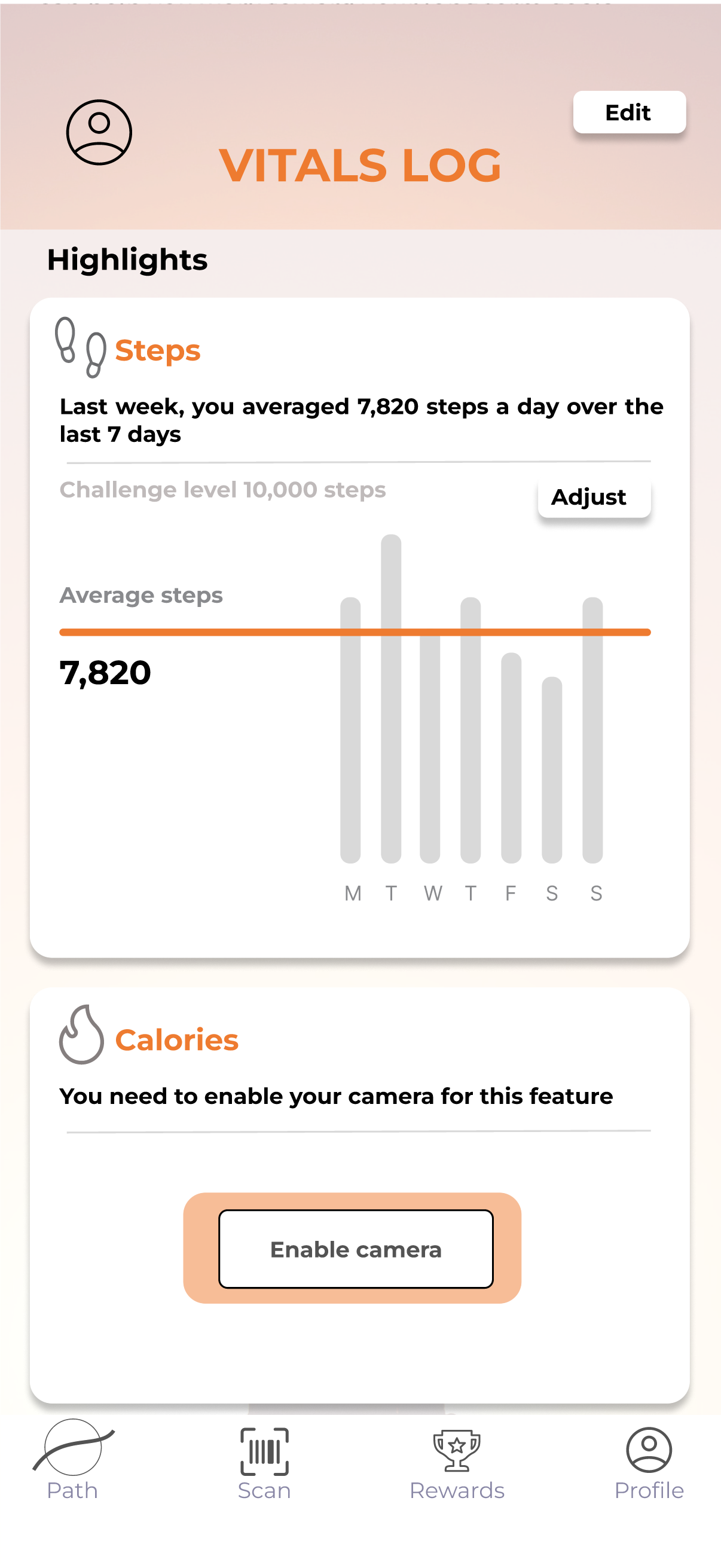
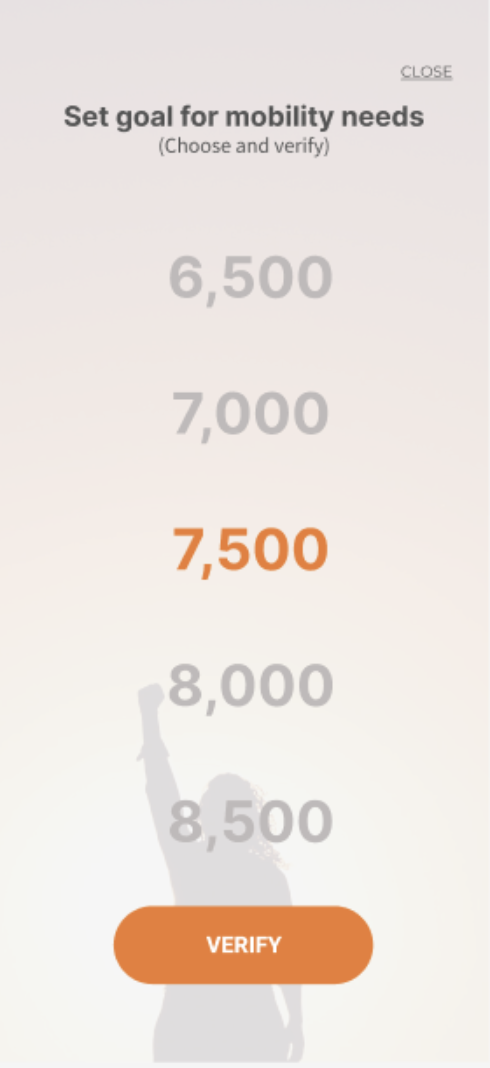
Learning through familiar metrics would be valuable for users, but there would be times when goals would need to be adjusted.
Prime Care needed to offer reduced goals for certain users based on verified options, so they could still receive rewards.
I decided to build this adjustment/verification tool straight into the app, linking it to the care account already on record.
Building support through self-reflection and community
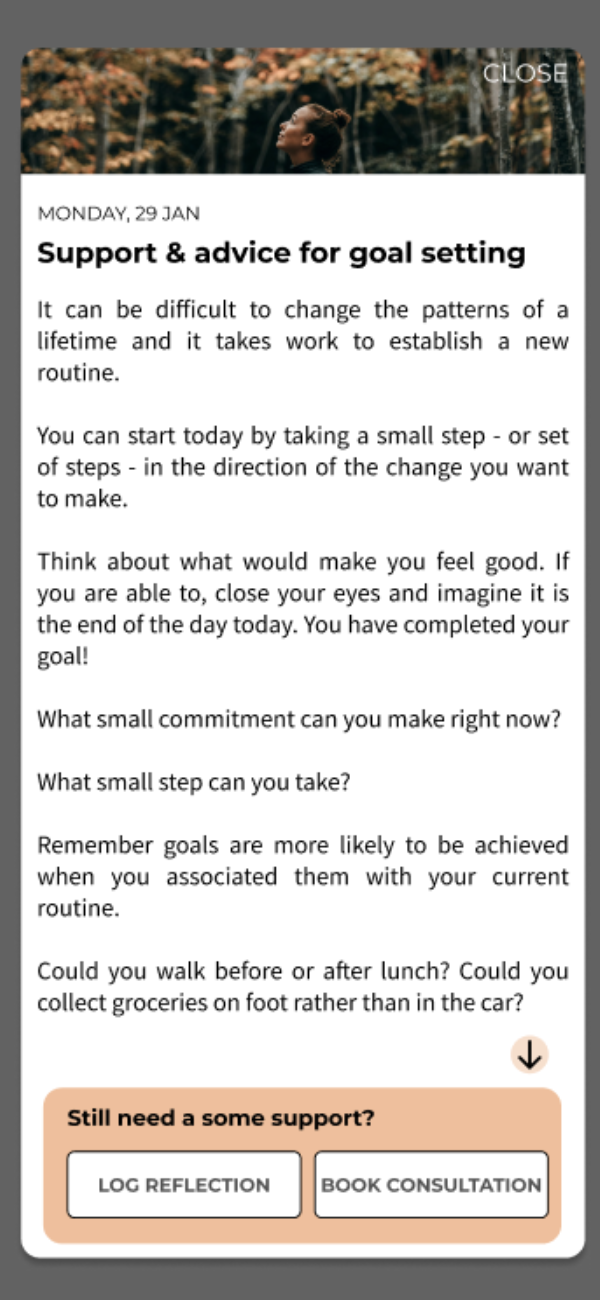
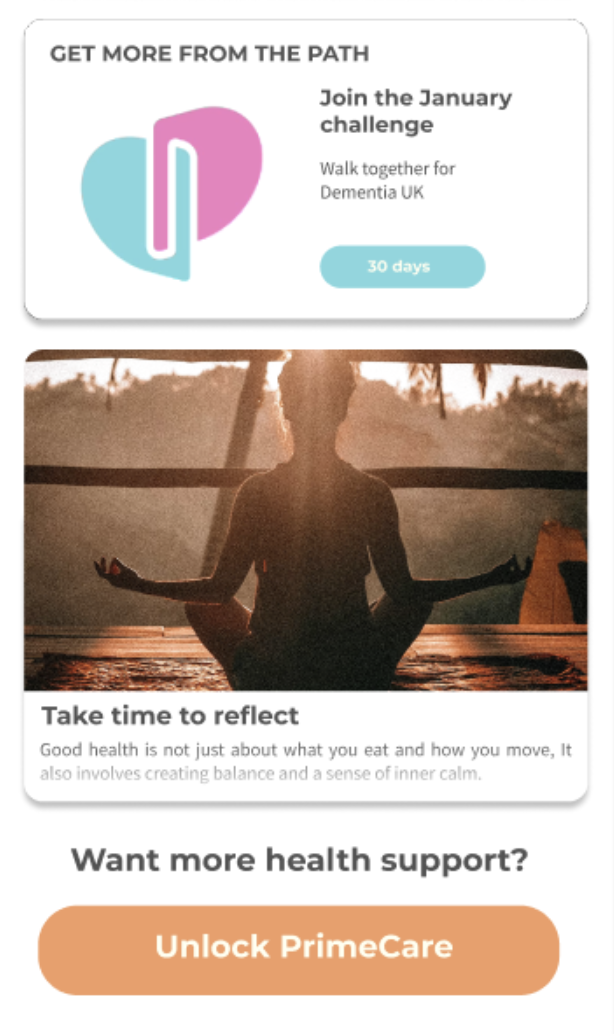
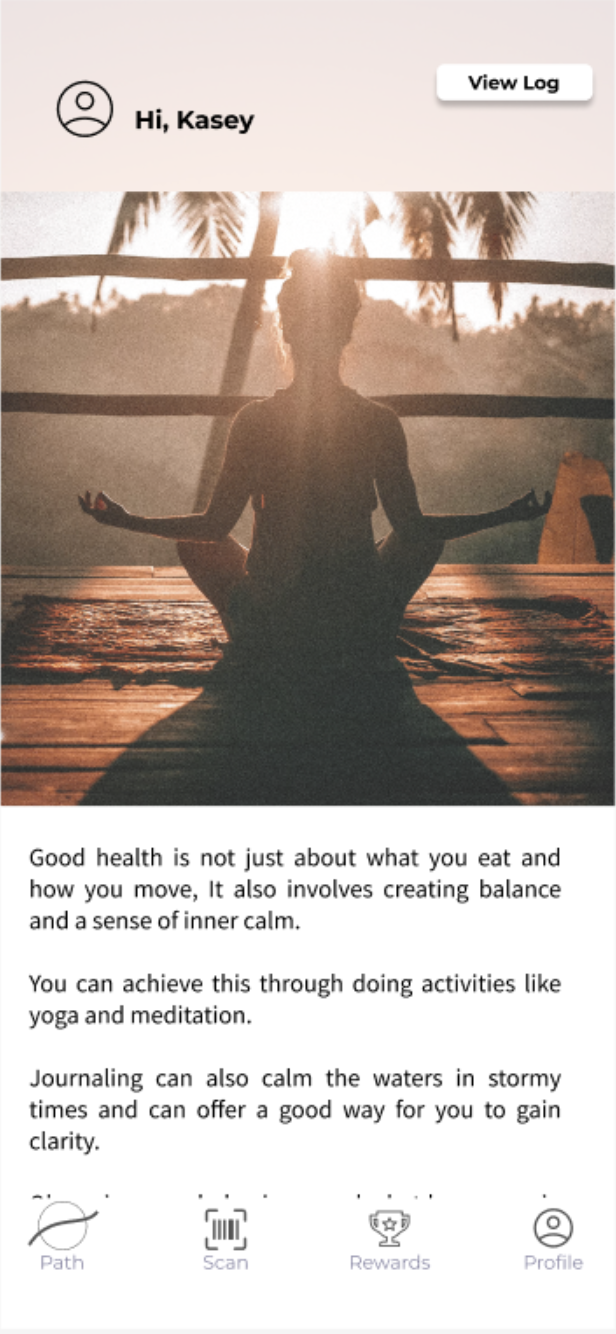
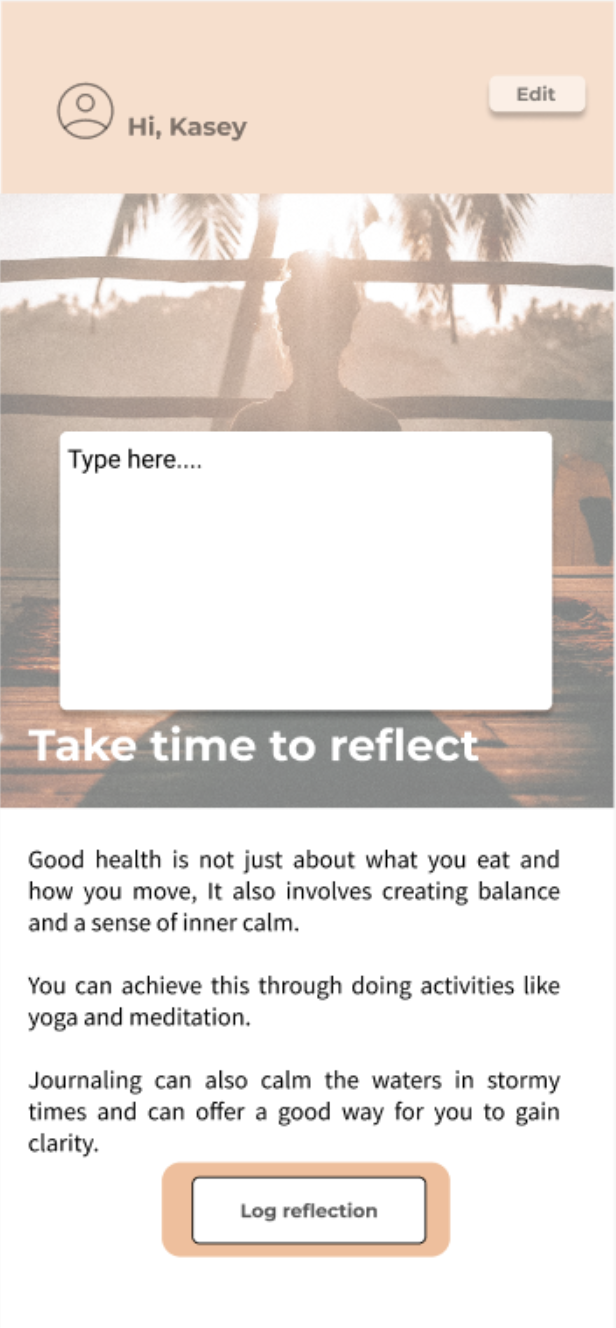
Change comes from recognising one’s patterns. Journaling is a proven method for allowing this process, especially when combined with external reflection that chat systems can offer. Users felt that offering this feature within the app extended the supportive mentor framework. Over time, AI integration could enhance this.
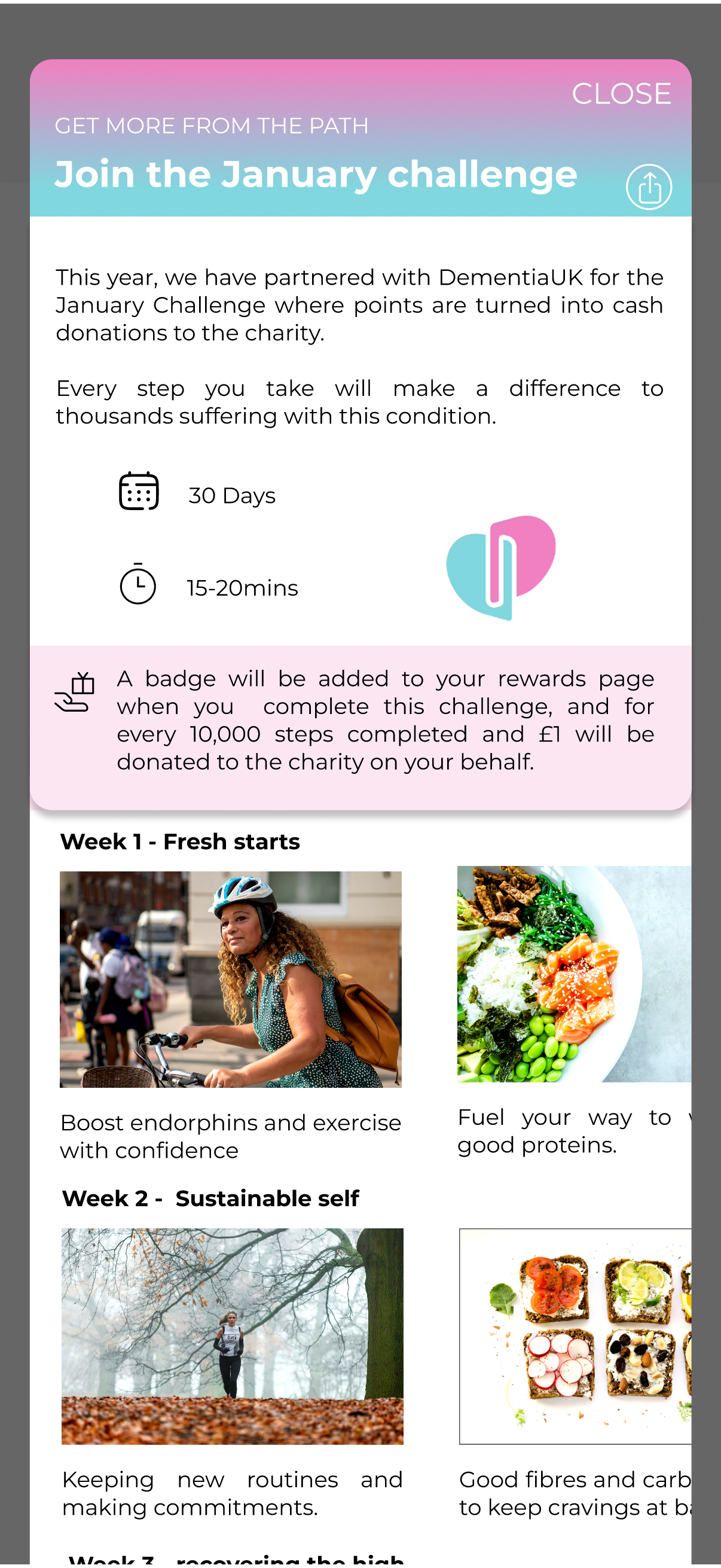
Engaging in community activities was also seen as a vital touchpoint for cultivating better habits and sustaining people. Linking challenges to missions with a purpose was valued by users during the testing phase. This also had the potential to expand the user base through partnerships with chosen charities and organisations.
Overall, these offerings were felt to keep the user “feeling human,” centred on their “own journey,” while also feeling “motivation from others” on a similar path.
*Sources:
Campbell, Joseph, 1990. The Hero’s Journey: Joseph Campbell on His Life & Work. Ed., P. Cousineau. London: HarperCollins.
Ramos, Diego, 2011. The Hero’s Journey: Joseph Campbell’s Vision of the Hero’s Path, via Medium.